Have you ever stopped while writing and wondered whether to use recognising or recognizing? You are not alone. This is a common spelling question, and the confusion is easy to understand.
The simple answer is that both spellings are correct.
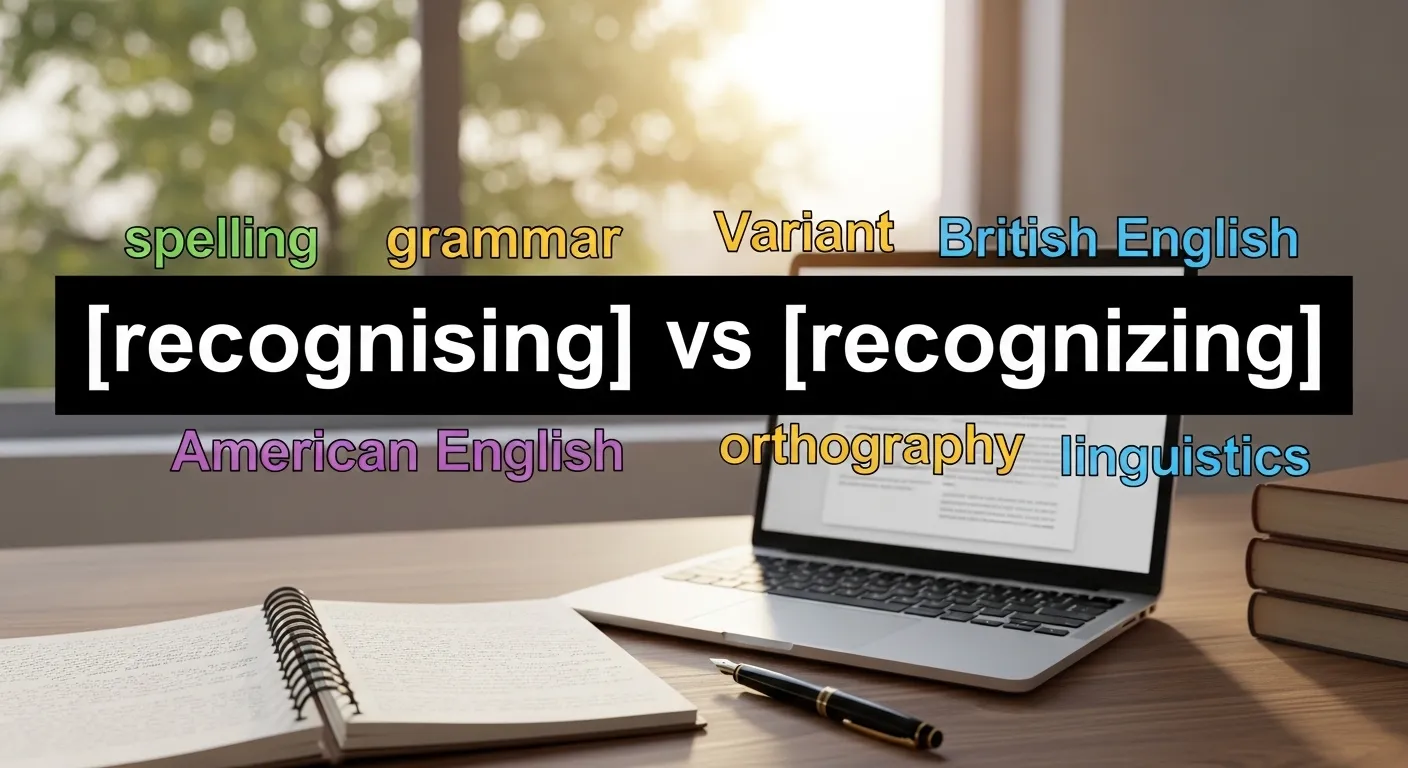
Recognising is the preferred form in British English, while recognizing is standard in American English.
Because English has different regional spelling rules, many writers are unsure which version to choose.
In this guide, you will learn the difference between these two spellings, where they come from, and which one is best for your audience.
Recognising or Recognizing – Quick Answer
The quick answer is easy: both recognising and recognizing are correct.
- Recognising is the preferred spelling in British English.
- Recognizing is the preferred spelling in American English.
They mean exactly the same thing: noticing, identifying, or acknowledging someone or something.
Examples
- British English: She is good at recognising faces.
- American English: She is good at recognizing faces.
- British English: The award is for recognising excellence.
- American English: The award is for recognizing excellence.
So, the difference is not about meaning. It is only about regional spelling.
The Origin of Recognising and Recognizing
The word comes from the Latin word recognoscere, which means “to know again” or “to acknowledge.” It passed into English through Old French and later became part of modern English.
The ending is where the spelling difference appears. Many English verbs use either -ise or -ize. This split developed over time because British and American English evolved in slightly different ways.
Interestingly, the -ize ending is actually closer to the original Greek and Latin roots. The suffix comes from the Greek -izein, meaning “to make” or “to become.” That is why words like realize, organize, and recognize use -ize.
In Britain, both -ise and -ize have been used for centuries. Over time, -ise became more common in everyday British writing. In the United States, -ize became the standard form.
So while recognising looks more British and recognizing looks more American, both have deep historical roots.
British English vs American English Spelling
The main difference between recognising and recognizing is regional preference.
British English
- Usually prefers recognising.
- Common in the UK, Australia, New Zealand, and South Africa.
- Often seen in newspapers, schools, and business writing.
American English
- Always prefers recognizing.
- Standard in the United States.
- Used in schools, media, and professional communication.
Comparison Table
| Feature | Recognising | Recognizing |
| Meaning | Same | Same |
| Region | UK and Commonwealth | United States |
| Spelling Style | -ise | -ize |
| Formal Acceptance | Correct | Correct |
| Common Usage | British publications | American publications |
More Examples
| British English | American English |
| recognising talent | recognizing talent |
| recognising the problem | recognizing the problem |
| recognising success | recognizing success |
| recognising achievement | recognizing achievement |
Which Spelling Should You Use?
The best spelling depends on your audience.
Use Recognizing If:
- You are writing for an American audience.
- Your readers are in the United States.
- You follow American style guides like AP or Chicago.
Use Recognising If:
- You are writing for a British audience.
- Your readers are in the UK or Commonwealth countries.
- Your organization follows British spelling rules.
For Global Audiences
Choose one spelling and stay consistent throughout your writing. Do not switch between the two in the same document.
Consistency matters more than which version you choose. A mixed spelling style can look careless.
Common Mistakes with Recognizing or Recognising
Even though both spellings are correct, writers often make mistakes.
Mistake 1: Mixing Spellings
❌ The company is recognizing and recognising employee success.
✅ The company is recognizing employee success.
✅ The company is recognising employee success.
Choose one style only.
Mistake 2: Using the Wrong Regional Style
❌ A US business report using recognising.
✅ A US business report should use recognizing.
Mistake 3: Assuming One Is Wrong
Some people think only one spelling is correct. That is not true.
- Recognising = correct in British English
- Recognizing = correct in American English
Mistake 4: Confusing with Similar Words
Words like acknowledging, identifying, and appreciating have related meanings, but they are not always exact substitutes.
Recognizing and Recognising in Everyday Examples
Here is how the word appears in daily life.
In Emails
- We appreciate recognising the team’s hard work.
- Thank you for recognizing our efforts.
In News Headlines
- Charity praised for recognising local heroes.
- Company wins award for recognizing innovation.
On Social Media
- Love recognising old friends in photos.
- I enjoy recognizing familiar faces at events.
In Formal Writing
- The program focuses on recognising academic excellence.
- The initiative aims at recognizing outstanding achievement.
In Education
- Teachers are skilled at recognising student potential.
- Good educators excel at recognizing learning needs.
Recognizing vs Recognising – Google Trends & Usage Data
Search data shows that both spellings are widely used, but their popularity depends on location.
Where Recognising Is More Popular
- United Kingdom
- Australia
- New Zealand
- Ireland
- South Africa
Where Recognizing Is More Popular
- United States
- Canada (often mixed, but American spelling is common)
Usage Patterns
- Recognizing has higher global search volume because of the large American audience.
- Recognising remains dominant in British English regions.
- Both spellings are common in international publishing.
Keyword Comparison Table
| Keyword Variation | Primary Region | Usage Level |
| recognising | UK, Australia | High |
| recognizing | USA, Global | Very High |
| recognising meaning | UK | Medium |
| recognizing meaning | USA | High |
| recognising vs recognizing | Global | High |
For SEO, choose the spelling that matches your target audience.
Recognising vs Recognizing: Keyword Comparison
| Aspect | Recognising | Recognizing |
| Correct Spelling | Yes | Yes |
| Meaning | Same | Same |
| Preferred In | British English | American English |
| Common Regions | UK, Australia, NZ | USA |
| Academic Use | Accepted | Accepted |
| Business Use | Common in UK | Standard in US |
FAQs
Is recognising correct?
Yes, recognising is correct in British English.
Is recognizing correct?
Yes, recognizing is correct in American English.
Which spelling is more common worldwide?
Recognizing is more common globally because American English has a larger online presence.
Can I use recognizing in British English?
Yes, though recognising is more common. Some British publishers also accept -ize spellings.
Can I use recognising in American English?
It is understandable, but it may look unusual. American readers expect recognizing.
Do both words mean the same thing?
Yes. They both mean identifying, acknowledging, or appreciating something.
Which spelling is better for SEO?
Use the spelling your target audience is most likely to search for. For US readers, use recognizing. For UK readers, use recognising.
Conclusion
The choice between recognising and recognizing is simple once you know the rule. Both spellings are correct, and both mean exactly the same thing. The only real difference is location.
Use recognising when writing for readers in the United Kingdom and most Commonwealth countries.
Use recognizing when writing for readers in the United States.
If your audience is international, either version is acceptable, but consistency is essential.
This spelling difference is part of the rich history of English. It reflects how the language has grown across different regions.
Now, whenever you see recognising or recognizing, you will know exactly why both exist and when to use each one.

I’m English language author writing emphasises clarity, structure, and close attention to language. My work is often examined for stylistic comparison, focusing on Grammar work, narrative control, and subtle thematic development.