Have you ever wondered whether the correct word is wether or whether? You’re not alone. These two words look similar, but their meanings are completely different.
Whether means “if” or expresses a choice, while wether is a male sheep.
Many writers accidentally use wether instead of whether, especially when typing quickly. Because both words are real, spell check may not catch the mistake. In most cases, whether is the word you need.
This guide explains the difference, meanings, examples, and simple tips to help you use the correct word with confidence every time.
Wether or Whether – Quick Answer
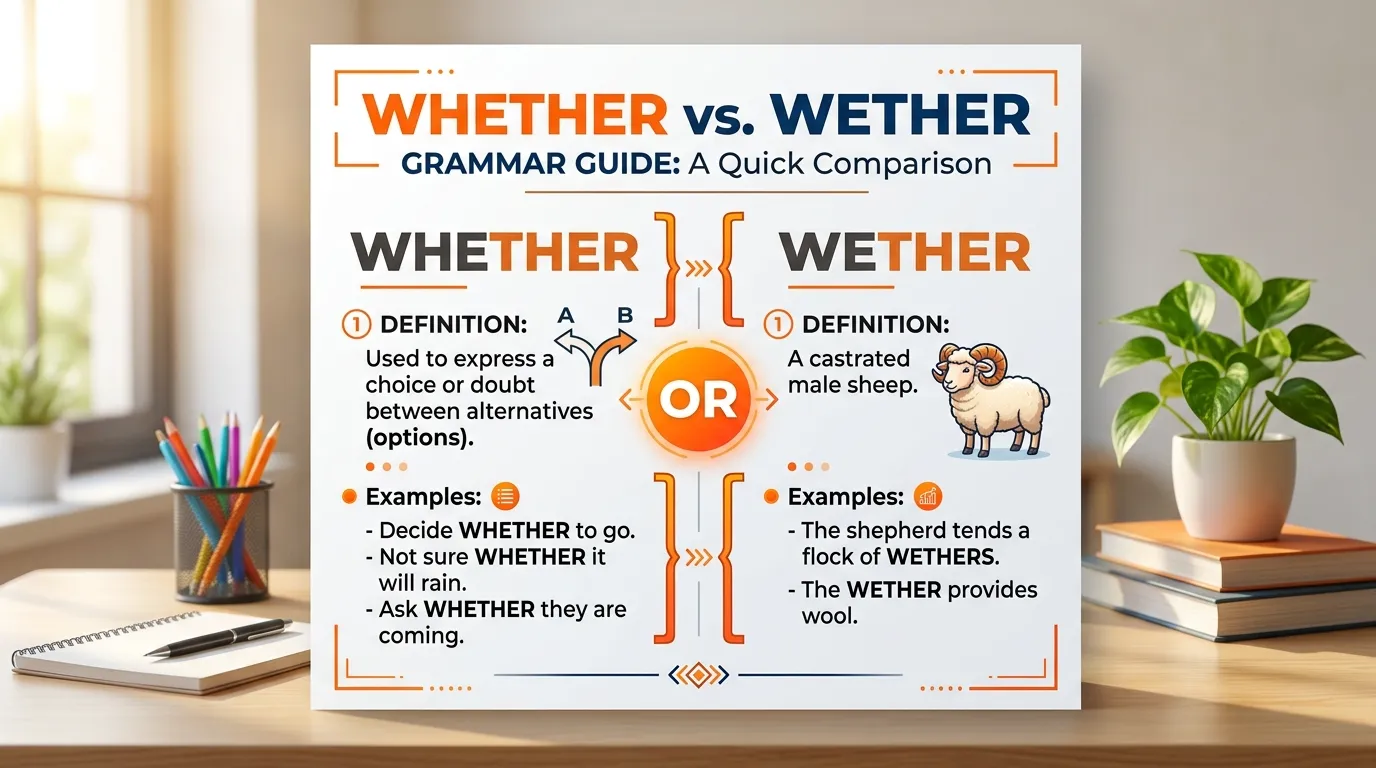
The difference between wether and whether is simple.
- Whether means if or expressing a choice between alternatives.
- Wether is a noun that refers to a castrated male sheep.
Examples
✅ I don’t know whether it will rain.
✅ She is deciding whether to attend the meeting.
✅ The farmer separated the wether from the flock.
Quick Comparison
| Word | Meaning | Common Usage |
| Whether | If; expressing alternatives | Very common |
| Wether | Castrated male sheep | Rare |
For everyday writing, you almost always need whether.
Wether Meaning
A wether is a male sheep that has been castrated.
The word is mainly used in:
- Agriculture
- Farming
- Livestock management
- Veterinary contexts
Examples
- The wether grazed peacefully in the field.
- Farmers often separate wethers from breeding rams.
- The wether was sold at the livestock market.
Because most people rarely discuss sheep farming, this word is uncommon in everyday English.
Whether Meaning
Whether is a conjunction used to introduce alternatives, possibilities, or uncertainty.
It often means:
- If
- Which option
- Regardless of which choice
Examples
- I am not sure whether she will come.
- We need to decide whether to stay or leave.
- Whether you agree or disagree, the meeting will continue.
This is one of the most frequently used words in English writing.
The Origin of Wether and Whether
Understanding the origins helps explain why these words look similar.
Origin of Wether
The word wether comes from Old English weðer, meaning a castrated ram.
Its meaning has remained largely unchanged for centuries.
Because sheep farming played a major role in early societies, the term became part of agricultural vocabulary.
Origin of Whether
The word whether comes from Old English hwæther, meaning “which of two” or “which alternative.”
Over time, it evolved into the modern word used to express uncertainty and choices.
Why the Confusion Exists
The words:
- Look similar
- Sound similar
- Differ by only two letters
However, their meanings are completely unrelated.
British English vs American English Spelling
Unlike many English words, there is no spelling difference between British and American English.
Both regions use:
- Whether
- Wether
Comparison Table
| Meaning | British English | American English |
| If / choice | Whether | Whether |
| Male sheep | Wether | Wether |
Examples
British:
- I wonder whether it will snow.
American:
- I wonder whether it will snow.
The spelling remains identical worldwide.
Which Spelling Should You Use?
The correct choice depends on what you mean.
Use Whether When:
- Expressing uncertainty
- Presenting alternatives
- Asking indirect questions
Examples:
- I don’t know whether he called.
- We must decide whether to invest.
- Tell me whether you agree.
Use Wether When:
- Talking about sheep
- Writing about livestock
- Discussing farming
Examples:
- The wether was moved to a separate pen.
- The farmer raised several wethers.
Audience-Based Advice
| Audience | Recommended Word |
| Students | Whether |
| Writers | Whether |
| Business professionals | Whether |
| General readers | Whether |
| Farmers | Whether or wether, depending on context |
For most people, whether is the correct choice nearly 100% of the time.
Why People Confuse Wether and Whether
Several factors contribute to the confusion.
Similar Spelling
Only two letters differ.
- Whether
- Wether
Similar Pronunciation
Many speakers pronounce them similarly.
Typing Errors
Writers often accidentally omit letters when typing quickly.
Lack of Familiarity
Most people know whether but rarely encounter wether.
As a result, they may assume both words are variants of the same term.
Common Mistakes with Whether or Wether
Mistake #1
❌ I don’t know wether she is coming.
✔ I don’t know whether she is coming.
Mistake #2
❌ We must decide wether to continue.
✔ We must decide whether to continue.
Mistake #3
❌ Whether refers to a male sheep.
✔ Wether refers to a male sheep.
Mistake #4
❌ The farmer sold several whethers.
✔ The farmer sold several wethers.
Quick Tip
If you can replace the word with if, use whether.
Whether and Wether in Everyday Examples
Emails
- Please confirm whether you received the document.
- Let me know whether you can attend.
News Articles
- Officials are deciding whether to approve the project.
- Analysts debate whether the economy will improve.
Social Media
- Can’t decide whether to watch a movie or read a book.
- Unsure whether this is a good idea.
Formal Writing
- Researchers examined whether the treatment was effective.
- The committee considered whether changes were necessary.
Agricultural Writing
- The wether was kept with the other sheep.
- Farmers often raise wethers for wool and meat production.
Whether vs Wether – Google Trends & Usage Data
Search behavior shows a major difference in popularity.
Whether
Commonly searched for:
- Grammar help
- Writing assistance
- English learning
- Exam preparation
Wether
Commonly searched for:
- Livestock terms
- Sheep farming
- Animal identification
Search Popularity
| Word | Relative Popularity |
| Whether | Very High |
| Wether | Very Low |
Popular Countries Searching This Keyword
- United States
- United Kingdom
- Canada
- Australia
- India
- Pakistan
Most searches come from people trying to determine which spelling is correct.
Wether vs Whether: Comparison Table
| Feature | Wether | Whether |
| Part of Speech | Noun | Conjunction |
| Meaning | Castrated male sheep | If; expressing alternatives |
| Frequency | Rare | Very common |
| Everyday Use | Uncommon | Common |
| Farming Context | Yes | No |
| Writing Context | Rare | Frequent |
Simple Memory Trick
A quick trick can help.
Whether contains “h-e” like “choice here.”
Whenever you’re choosing between options, use whether.
Another trick:
Wether = Wool
Both words relate to sheep.
FAQs
Is it wether or whether?
In most situations, whether is correct.
What does whether mean?
Whether means if or introduces alternatives.
What is a wether?
A wether is a castrated male sheep.
Is wether a real word?
Yes. It is an agricultural term.
Why do people confuse wether and whether?
They look and sound similar.
Can I use wether instead of whether?
No. They have different meanings.
How do I remember the difference?
If you mean “if,” use whether. If you mean a sheep, use wether.
Conclusion
The difference between wether and whether is simple.
Whether means if or introduces a choice, while wether is a farming term for a male sheep.
For everyday writing, emails, essays, and conversations, you’ll almost always need whether.
A simple memory trick is: if you’re talking about a choice, use whether; if you’re talking about sheep, use wether.
Remembering this rule will help you avoid a common spelling mistake and write with confidence.