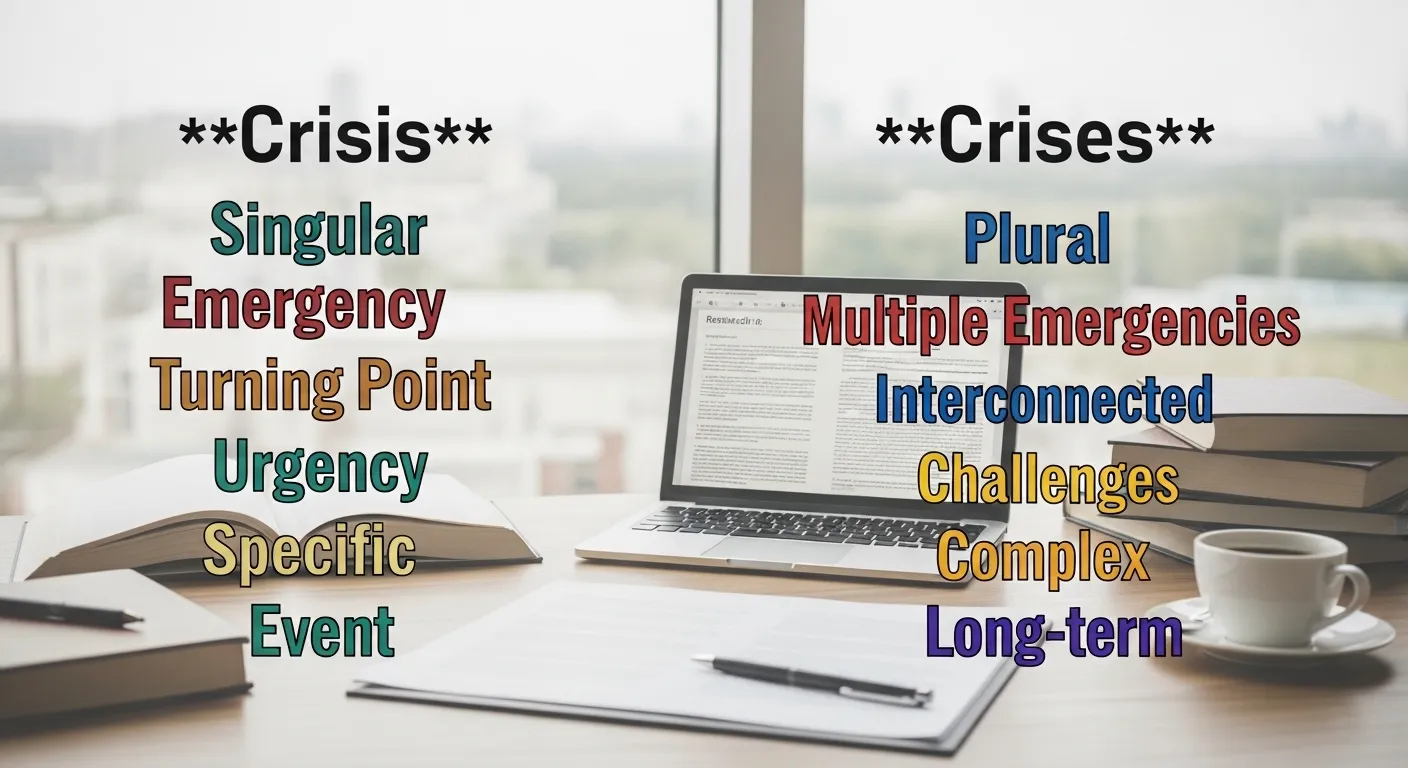
Many English learners and even native speakers get confused between “crisis” and “crises.” They look similar, but their meaning changes with number. This small difference often leads to mistakes in exams, writing, and professional communication.
People search crisis or crises when they are unsure about plural form, spelling, or correct usage in real situations like finance, health, or global issues.
The answer is simple: use “crisis” for one problem and “crises” for many problems.
In this article, you’ll get a simple explanation, quick rules, and real examples so you can always choose the correct word with confidence.
Crisis or Crises – Quick Answer
The word “crisis” is singular. It means one serious problem or dangerous situation.
The word “crises” is plural. It means more than one serious problem or dangerous situation.
Simple Examples
- Crisis (singular): The country is facing a financial crisis.
- Crises (plural): The world is facing multiple crises like climate and health crises.
Easy Rule
- One problem = crisis
- Many problems = crises
Memory Trick
Think of:
- Crisis = one “s” sound problem
- Crises = many problems happening together
This small spelling change makes a big grammatical difference.
The Origin of Crisis and Crises
The word crisis comes from the Greek word “krisis,” which means decision or turning point.
In ancient Greek medicine, doctors used it to describe the moment when a patient’s condition would either improve or become worse. Over time, the meaning expanded beyond health to include any serious situation in life, politics, or economy.
The plural form “crises” also comes from Greek grammar rules. In Greek, many nouns change their endings when pluralized, and English adopted this pattern.
Why the confusion exists
English learners struggle because:
- The spelling change is not just adding “s”
- It changes -is → -es
- Pronunciation also changes (crisis → cry-sis, crises → cry-seez)
So, the difference is historical, not random.
British English vs American English Spelling
Good news: both British and American English use the same spellings for crisis and crises.
There is no regional difference here. However, usage frequency and style may vary slightly in academic or news writing.
Comparison Table
| Form | Type | Meaning | Example |
| Crisis | Singular | One serious situation | The hospital is in crisis. |
| Crises | Plural | Multiple serious situations | Several crises are affecting the economy. |
Important Note
Unlike words such as “colour/color,” there is no spelling variation between UK and US English for this word pair.
Which Spelling Should You Use?
The correct usage depends only on number, not region.
Use “crisis” when:
- Talking about one situation
- Writing about a single event or problem
Example:
- The company is facing a leadership crisis.
Use “crises” when:
- Talking about multiple problems
- Referring to global or complex situations
Example:
- The world is dealing with economic and environmental crises.
Simple Guide
- Academic writing → be precise (crisis vs crises)
- News writing → often uses “crises” for global issues
- Everyday writing → follow the same grammar rule
No exceptions exist in modern English.
Common Mistakes with Crises or Crisis
Many learners make simple but important mistakes. Here are the most common ones:
1. Using “crisis” for plural
❌ The country is facing many crisis
✔ The country is facing many crises
2. Wrong spelling of plural
❌ crisises
✔ crises
3. Mixing singular and plural
❌ The crisis are getting worse
✔ The crises are getting worse
4. Confusing pronunciation
- crisis = cry-sis
- crises = cry-seez
5. Overusing “crisis” in formal writing
Sometimes writers use “crisis” when they actually mean multiple issues.
Tip
Always check if the subject is singular or plural before writing.
Crises and Crisis in Everyday Examples
Understanding grammar is easier when you see real-life usage.
1. News Headlines
- The government is handling a political crisis.
- Global crises are affecting supply chains.
2. Business Emails
- Our company is managing a temporary crisis in operations.
- We must prepare for financial crises in uncertain markets.
3. Social Media
- Feeling like life is one big crisis today.
- Climate and health crises are trending topics worldwide.
4. Academic Writing
- The study focuses on economic crises in developing countries.
- Each crisis requires a different solution.
5. Daily Conversation
- I am going through a small crisis at work.
- We all face personal crises in life.
These examples show how flexible the word is in English.
Crises vs Crisis – Google Trends & Usage Data
Search interest for “crisis or crises” is consistently high, especially during global events.
Key Observations
- Searches increase during economic downturns
- Health emergencies increase usage (like pandemics)
- News and academic users search this keyword the most
- Students also search it heavily during exam seasons
Why people search this keyword
- Grammar confusion
- Plural form uncertainty
- Academic writing support
- News reading comprehension
Context of usage
- Journalism: very high usage
- Education: moderate to high
- Social media: rising usage during global issues
The keyword remains evergreen because crises happen in every generation.
Comparison Table: Crisis vs Crises
| Feature | Crisis | Crises |
| Type | Singular noun | Plural noun |
| Meaning | One serious situation | Multiple serious situations |
| Spelling change | None | “is” → “es” |
| Pronunciation | cry-sis | cry-seez |
| Example | A health crisis is spreading | Health crises are spreading |
FAQs
1. What is the difference between crisis and crises?
Crisis is singular, while crises is plural.
2. How do you pronounce crises?
It is pronounced as cry-seez.
3. Is crisis a countable noun?
Yes, it is countable. You can have one crisis or many crises.
4. Can I use crisis for plural situations?
No. For multiple situations, you must use crises.
5. Why does crises not become crisis + s?
Because it follows Greek plural rules, not regular English rules.
6. Is crisis used in formal writing?
Yes, it is commonly used in academic, news, and professional writing.
7. What are examples of modern crises?
Economic crises, climate crises, health crises, and political crises.
Conclusion
The difference between crisis and crises is small but very important. Crisis means one serious situation, while crises means more than one.
This confusion comes from English grammar rules that come from Greek and Latin, where plural forms often change spelling.
Using the correct form makes your writing clearer in exams, emails, news, and professional work.
Just remember: one problem = crisis, many problems = crises.