Many people get confused by mear or mere. They look similar, but only one is correct in modern English.
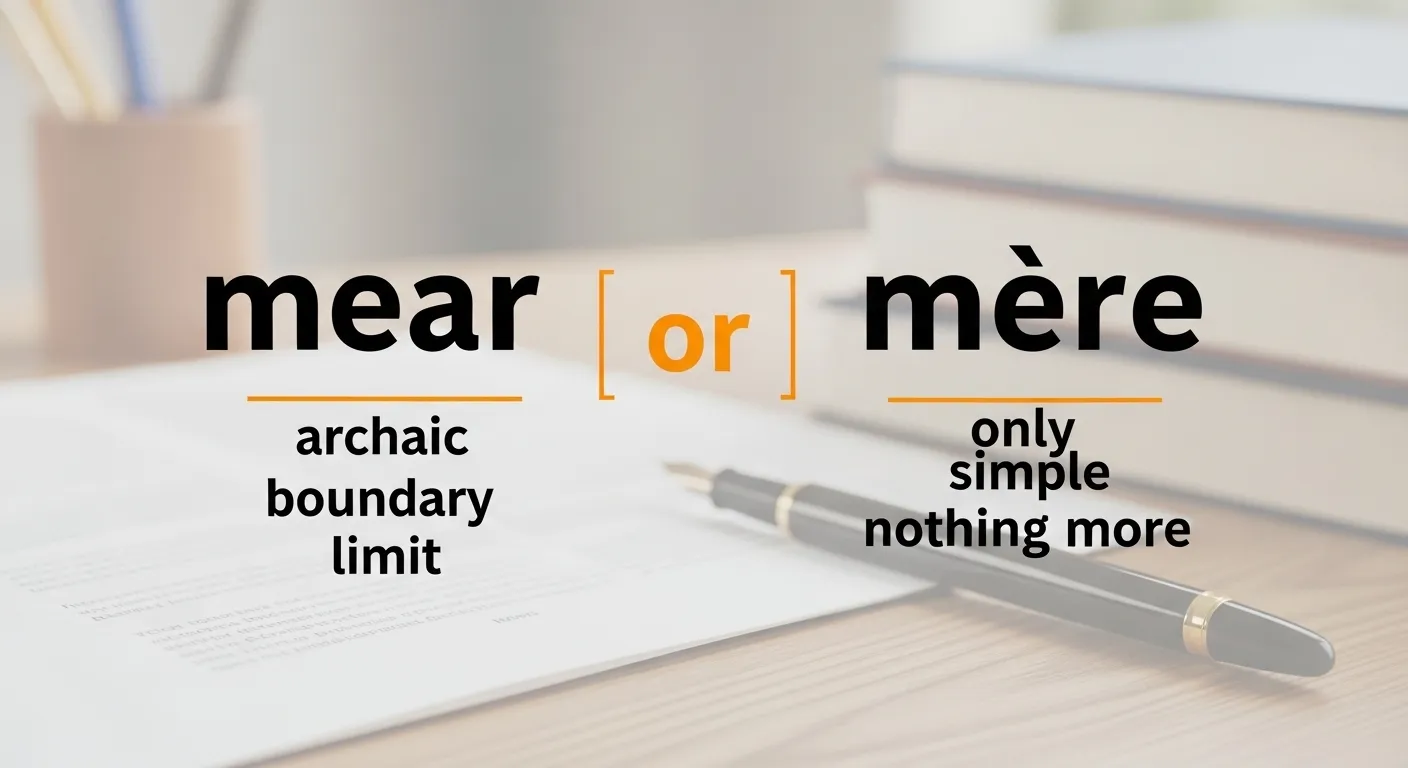
Mere is the right spelling. It means only, just, or nothing more than. For example, “It was a mere mistake” means it was only a small mistake.
Mear is almost always a spelling error. While it has appeared in some old or regional forms of English, it is not used in standard writing today.
This confusion is common because English spelling can be tricky. Some incorrect spellings also appear online, which makes them seem correct.
The simple rule is this: use mere in all modern writing. If you are writing an email, essay, article, or social media post, mere is the word you need.
Mear or Mere – Quick Answer
If you are choosing between mear and mere, the correct spelling is mere.
Mere means simple, only, or nothing more than.
Examples:
- It was a mere accident.
- She is a mere child.
- That is mere speculation.
In modern English, mear is almost always incorrect. If you mean “only” or “simply,” always use mere.
The Origin of Mear and Mere
The History of Mere
The word mere comes from Old English mǣre, meaning pure, clear, or unmixed. Over time, its meaning changed. Today, it usually means nothing more than or simply.
It has been part of English for many centuries. Writers, scholars, and speakers have used it consistently.
What About Mear?
Mear is not a standard modern English word. In some old dialects and place names, it appeared as a variant form. It could refer to a boundary or marker. However, this use is rare and mostly historical.
That is why most people should avoid using mear in regular writing.
British English vs American English Spelling
There is no spelling difference between British and American English for this word. Both use mere.
Whether you are writing in London, New York, Sydney, or Toronto, the correct spelling remains the same.
Comparison Table: British vs American Usage
| English Variant | Correct Spelling | Example |
| British English | mere | It was a mere suggestion. |
| American English | mere | He paid a mere dollar. |
| Australian English | mere | She showed mere interest. |
| Canadian English | mere | That was mere luck. |
So, unlike words such as colour and color, there is no regional spelling change here.
Which Spelling Should You Use?
You should almost always use mere.
Use Mere If Your Audience Is:
- American readers
- British readers
- Canadian readers
- Australian readers
- Global English audiences
Mere is the accepted and correct spelling everywhere.
Use mear only if you are discussing historical language, old place names, or regional dialect studies. For normal writing, it does not belong.
Common Mistakes with Mere or Mear
Many writers accidentally use mear because it sounds similar to mere. This is a common spelling error.
Incorrect vs Correct
| Incorrect | Correct |
| It was mear coincidence. | It was mere coincidence. |
| She is a mear beginner. | She is a mere beginner. |
| That is mear gossip. | That is mere gossip. |
Why This Mistake Happens
- The words sound similar.
- English spelling can be tricky.
- Typing errors are common.
- Some incorrect websites repeat the mistake.
Always double-check your spelling when writing professionally.
Mere vs Mear in Everyday Examples
In Emails
- This is merely a reminder.
- It was a mere misunderstanding.
In News Writing
- The issue is not a mere technical fault.
- Critics called it mere political theater.
On Social Media
- That is mere speculation.
- It was a mere joke.
In Formal Writing
- The results were not due to mere chance.
- Mere possession does not prove ownership.
In every case, mere is the correct choice.
Mere and Mear – Google Trends & Usage Data
Search interest in mear or mere remains steady because many English learners and native speakers want quick clarification.
Where People Search Most
- United States
- United Kingdom
- Canada
- Australia
- India
- Pakistan
Most searches come from students, writers, bloggers, and professionals.
Why People Search This Keyword
- To check correct spelling
- To improve writing accuracy
- To avoid grammar mistakes
- To understand word meaning
- To learn regional usage rules
The overwhelming preference in books, articles, and online publications is mere.
Comparison Table: Mear vs Mere
| Feature | Mear | Mere |
| Standard English Word | No | Yes |
| Common Modern Usage | No | Yes |
| Accepted in US English | No | Yes |
| Accepted in UK English | No | Yes |
| Best for Professional Writing | No | Yes |
| Historical Use | Rare | Yes |
When to Use Mere
Use Mere to Mean:
- Only
- Simply
- Nothing more than
- Purely
Example Sentences
- It was a mere formality.
- He is a mere employee.
- That is mere nonsense.
- The cost was a mere five dollars.
Related Words and Phrases
- Merely
- Mere fact
- Mere chance
- Mere possibility
- Mere assumption
- Mere existence
These phrases are common in both speech and writing.
FAQs
Is mear a real word?
Mear has rare historical uses, but it is not a standard modern English word.
Which is correct: mear or mere?
Mere is the correct spelling in modern English.
Can I use mear in formal writing?
No. Use mere in all formal, academic, and professional writing.
Is mere used in American English?
Yes. It is common and correct in American English.
Is mere used in British English?
Yes. It is equally common in British English.
Why do people confuse mear and mere?
They sound similar, and spelling errors often spread online.
What does mere mean?
It means only, simply, or nothing more than.
Conclusion
The difference is simple: “mere” is correct, and “mear” is a mistake in modern English.
Mere is used in all types of writing British, American, academic, and professional and it means only or just. For example, “a mere mistake” means just a small mistake.
Mear may appear in old or rare historical usage, but it is not used in standard English today.
Quick rule: If you mean only or simply, always use mere.
Using the right spelling makes your writing clearer, cleaner, and more professional.