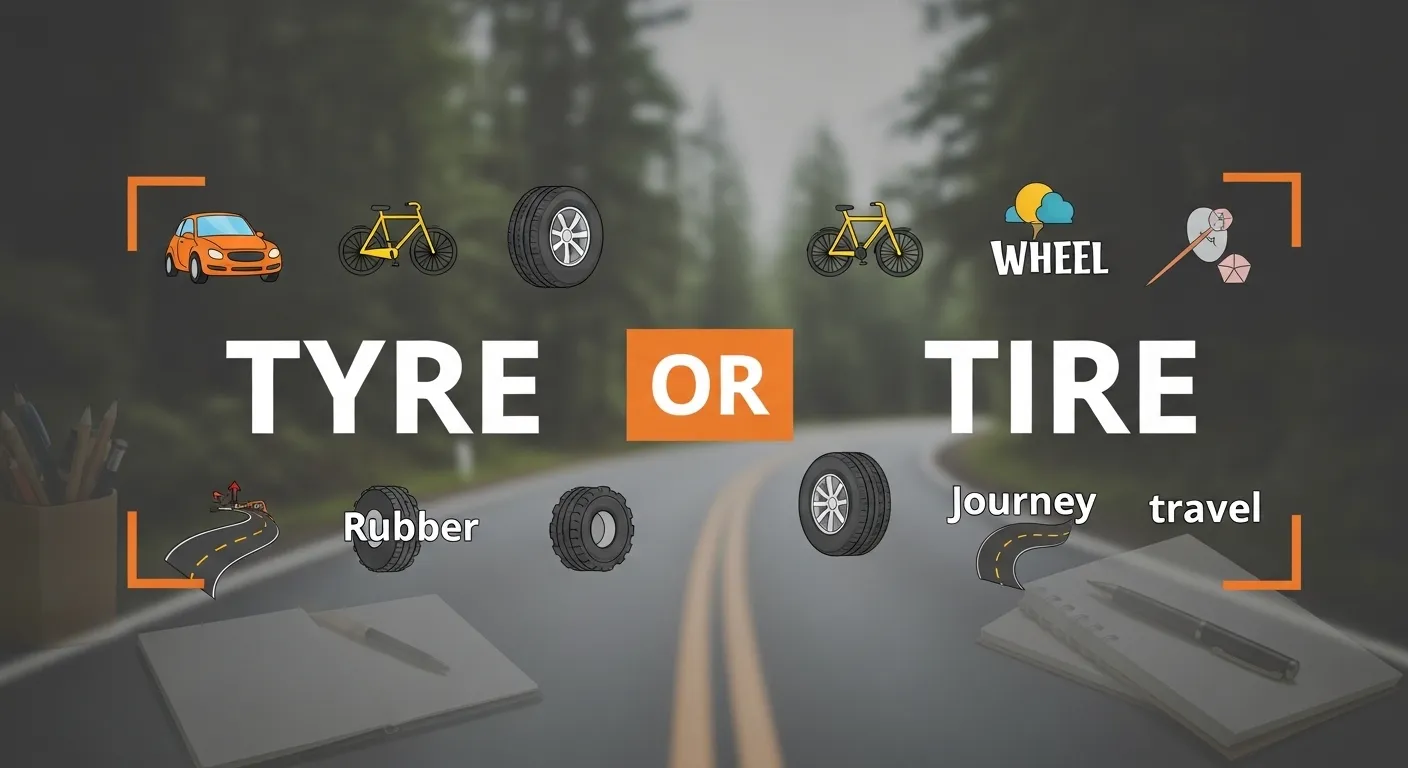
Confused between tyre and tire? You’re not alone. Both spellings are correct, but they are used in different types of English.
👉 Tyre is the standard spelling in British English
👉 Tire is used in American English
The confusion grows because tire also means to become tired, while tyre only refers to the rubber wheel covering on a vehicle.
One-line answer:
✅ Tyre = British English | ✅ Tire = American English
Choosing the right spelling helps your writing look more professional and consistent for your audience.
Tyre or Tire – Quick Answer
Both tyre and tire are correct, but they are used in different types of English.
- Tyre is the British English spelling for the rubber covering around a wheel.
- Tire is the American English spelling for the same object.
Examples
- British English: The car needs a new tyre.
- American English: The truck has a flat tire.
However, in both British and American English, tire can also mean “to become tired.”
Example
- After running for hours, I began to tire.
Quick Rule
- Use tyre for British English.
- Use tire for American English.
The Origin of Tyre and Tire
The history of tyre and tire goes back several centuries. Originally, the word came from the idea of something that “attires” or covers a wheel.
Over time, spelling differences developed between British and American English.
Origin of Tire
The spelling tire appeared earlier in English history. Americans later kept this shorter spelling for vehicle wheels.
Origin of Tyre
The spelling tyre became popular in British English during the 19th century. Many experts believe this spelling was created to clearly separate the wheel meaning from the verb “tire,” meaning exhaustion.
Why the Difference Exists
English spelling changed differently in different countries:
- Britain preferred tyre for wheels.
- America continued using tire.
Today, both spellings are accepted depending on the region.
British English vs American English Spelling
The main difference between tyre and tire comes from regional spelling rules.
| Meaning | British English | American English |
| Vehicle wheel covering | Tyre | Tire |
| Become exhausted | Tire | Tire |
British English Examples
- My bicycle tyre is flat.
- The old tyres need replacement.
American English Examples
- The car needs new tires.
- One tire lost air pressure.
Important Note
In British English:
- Tyre = wheel covering
- Tire = become tired
In American English:
- Tire is used for both meanings.
Which Spelling Should You Use?
Choosing between tyre and tire depends on your audience.
Use “Tyre” If Your Audience Is:
- From the United Kingdom
- From Australia
- From New Zealand
- From South Africa
- Used to British English
Use “Tire” If Your Audience Is:
- From the United States
- From Canada
- Reading American-style content
Best Choice for Global Audiences
If your website mainly targets international readers:
- Use the spelling that matches your website’s language style.
- Stay consistent throughout the article.
Simple Rule
- British English → tyre
- American English → tire
Consistency is more important than mixing both forms.
Common Mistakes with Tire or Tyre
Many writers accidentally mix these spellings in the same article.
Mistake 1: Mixing British and American English
❌ The car has a flat tyre and needs new tires.
✔ The car has a flat tyre and needs a replacement tyre.
✔ The car has a flat tire and needs a replacement tire.
Mistake 2: Using Tire Incorrectly in British English
❌ My bike tire is damaged. (British context)
✔ My bike tyre is damaged.
Mistake 3: Confusing Tire With Tiredness
❌ I need a new tire because I feel exhausted.
✔ I am beginning to tire after work.
Tyre vs Tire – Comparison Table
| Feature | Tyre | Tire |
| English Style | British English | American English |
| Meaning | Wheel covering | Wheel covering |
| Also Means Exhaustion? | No | Yes |
| Common In | UK, Australia | US, Canada |
| Example | Flat tyre | Flat tire |
Tire vs Tyre in Everyday Examples
In Emails
- Please replace the damaged tyre before delivery.
- My front tire keeps losing air.
In News Headlines
- Winter tyre safety warnings increase in the UK.
- Auto companies launch stronger truck tires in the US.
On Social Media
- Just changed all four tyres today.
- I got a flat tire on the highway.
In Formal Writing
- Proper tyre maintenance improves safety.
- Regular tire inspections reduce accidents.
In Advertising
- Premium winter tyres available now.
- Buy durable all-season tires online.
Tire and Tyre – Google Trends & Usage Data
Search data shows strong regional preferences for these spellings.
Countries That Prefer “Tyre”
- United Kingdom
- Australia
- India
- Pakistan
- South Africa
Countries That Prefer “Tire”
- United States
- Canada
- Philippines
Why “Tire” Gets More Global Searches
The United States has a large internet population, so tire often receives more worldwide searches.
Search Intent Behind “Tyre or Tire”
People search this keyword because they want to:
- Learn the correct spelling
- Understand British vs American English
- Write professionally
- Avoid grammar mistakes
- Improve SEO writing
Why People Confuse Tyre and Tire
There are several reasons this confusion happens.
1. Both Spellings Are Correct
Unlike many spelling mistakes, both forms are valid.
2. Different English Versions
British and American English often spell words differently.
3. The Word “Tire” Has Two Meanings
“Tire” can mean:
- A wheel covering
- Becoming exhausted
This creates extra confusion for learners.
4. Internet Content Mixes Both
Global websites often combine British and American spelling styles.
When to Use Tyre
Use tyre when writing in British English.
Common Situations
- UK blogs
- British newspapers
- Australian websites
- Vehicle manuals using British English
Examples
- The rear tyre needs air.
- These tyres perform well in winter.
When to Use Tire
Use tire when writing in American English.
Common Situations
- US websites
- American business writing
- Automotive stores in North America
Examples
- My car tire is flat.
- Tire pressure affects fuel economy.
Simple Memory Trick
A quick way to remember the difference:
“Y for Yorkshire, Tyre for British English.”
Since Yorkshire is in England, the Y in tyre can remind you of British spelling.
And remember:
- Americans usually remove extra letters, so they prefer tire.
Related Words and Semantic Keywords
Here are closely related terms often connected with tyre or tire:
- flat tire
- flat tyre
- tire pressure
- tyre pressure
- car wheel
- automobile tire
- vehicle tyre
- winter tires
- wheel alignment
- punctured tyre
- rubber tire
- tire replacement
Using related keywords naturally improves SEO relevance.
FAQs
1. Is tyre or tire correct?
Both are correct. Tyre is British English, while tire is American English.
2. Why do British people spell tire as tyre?
British English uses tyre to separate the wheel meaning from the verb “tire,” meaning exhaustion.
3. Is tire wrong in the UK?
Not completely, but British English usually prefers tyre for vehicles.
4. Which spelling should I use for SEO?
Use the spelling that matches your target audience and stay consistent throughout your content.
5. Does tire mean tired?
Yes. In both British and American English, tire can mean becoming exhausted.
6. Is tyre used in America?
Rarely. Americans almost always use tire.
7. What is the plural of tyre and tire?
- Tyre → tyres
- Tire → tires
Conclusion
The confusion between tyre or tire is common, but the rule is actually simple once you understand regional English differences.
Both spellings are correct. The only real difference is location and language style.
British English uses tyre for the rubber wheel covering on vehicles, while American English uses tire.
If your audience is from the UK, Australia, or other Commonwealth countries, use tyre.
If your readers are mainly from the United States or Canada, choose tire.
By remembering this simple distinction, you can write more professionally, improve clarity, and avoid common spelling mistakes in blogs, business writing, automotive content, and everyday communication.

I’m American writer known for precise, economical use of language and strong narrative voice. My work is frequently studied for sentence rhythm, word choice, and how meaning is shaped through grammar, making it valuable for close reading and English comparison studies.