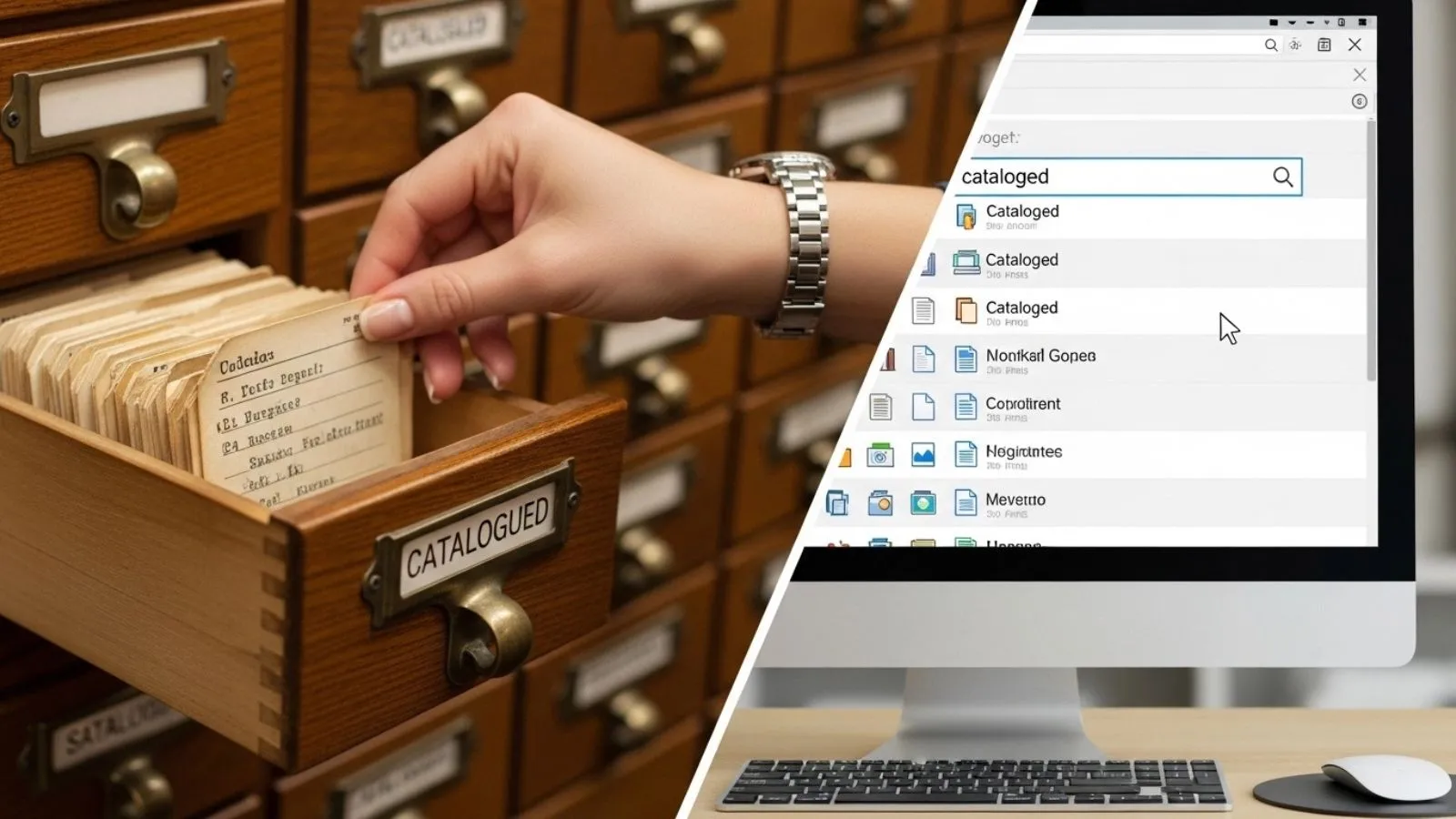
Have you ever wondered whether the correct spelling is catalogued or cataloged? You are not alone. Both spellings are correct, but the right choice depends on the type of English you use.
Catalogued is British English, while cataloged is American English.
Because both forms appear in books, websites, and professional writing, many writers become unsure about which spelling fits their audience.
This guide will explain the difference, origins, and correct usage of catalogued vs cataloged so you can write clearly and confidently in any context.
Catalogued or Cataloged – Quick Answer
The quick answer is:
- Catalogued → British English spelling.
- Cataloged → American English spelling.
Both are past tense forms of catalog, meaning “to make a systematic list of items.”
Examples:
- British English: The museum catalogued all new acquisitions last week.
- American English: The library cataloged hundreds of books this month.
✅ Key takeaway: Use the version that matches your audience.
The Origin of Catalogued And Cataloged
The word catalog comes from the Greek word katalogos, meaning “a list or register.” The word entered English in the 16th century and has been spelled with minor variations since then.
Historically, British English often added -ue in past tense verbs like catalogued, while American English simplified spellings to -ed (cataloged). This simplification is part of a broader American English trend led by Noah Webster in the early 19th century, aiming to make spelling more logical.
So, the spelling difference isn’t random it reflects a centuries-old evolution in English writing across regions.
British English vs American English Spelling
The main distinction is simple:
| Aspect | British English | American English |
|---|---|---|
| Past tense | catalogued | cataloged |
| Past participle | catalogued | cataloged |
| Usage | UK, Australia, Canada (formal & academic) | US (formal & everyday writing) |
| Common context | Museums, archives, libraries in Commonwealth countries | Libraries, databases, retail catalogs in the US |
Examples:
- UK: The art gallery catalogued the paintings in chronological order.
- US: The bookstore cataloged new arrivals online.
Which Spelling Should You Use?
Knowing your audience is crucial:
- United States: Always use cataloged. This is standard in journalism, academia, business, and casual writing.
- United Kingdom & Commonwealth: Prefer catalogued. It appears in official documents, museums, and historical writing.
- Global/Online Writing: Choose based on the majority audience. If your readers are international, either can work, but consistency is essential.
💡 Tip: Never mix spellings in a single piece of writing. Consistency improves readability and professionalism.
Common Mistakes with Cataloged or Catalogued
Even experienced writers make errors. Common mistakes include:
- Mixing spellings: The museum cataloged all items last year, and then catalogued the new donations. ❌
- Using “cataloged” in UK publications: The gallery cataloged the paintings. ❌ (Use catalogued)
- Incorrect formation: Catalogueded or Catalogeding ❌
- Confusing with “catalogue” noun: Remember: catalog is the verb; catalogue (UK) or catalog (US) is the noun.
Correct examples:
- UK: They catalogued the antique coins carefully.
- US: The library cataloged all rare books last month.
Cataloged and Catalogued in Everyday Examples
Emails
- UK: Dear Team, we catalogued the new files today.
- US: Hi John, we cataloged the customer orders yesterday.
News Articles
- UK: The museum catalogued its medieval collection.
- US: The library cataloged thousands of ebooks this month.
Social Media
- UK: We catalogued our favorite recipes! #Foodie
- US: We cataloged our summer photos! #TravelPics
Formal Writing
- UK: The university catalogued research papers from 2000–2020.
- US: The archive cataloged all documents digitally.
Cataloged vs Catalogued – Google Trends & Usage Data
According to Google Trends:
- Cataloged dominates in the US, especially in library, retail, and database searches.
- Catalogued is more popular in the UK, Australia, and Canada, mainly in museums, academic writing, and historical contexts.
This data confirms the rule: American English simplifies spellings, while British English retains traditional forms.
Comparison Table – Catalogued vs Cataloged
| Feature | Catalogued | Cataloged |
|---|---|---|
| English type | British | American |
| Past tense | Yes | Yes |
| Past participle | Yes | Yes |
| Formal writing | UK/academic | US/academic |
| Everyday writing | UK/online, emails | US/online, emails |
| Google Trends | UK, AU, CA | US, global commerce |
FAQs:
1. Is “catalogued” correct?
Yes, it is correct in British English.
2. Is “cataloged” correct?
Yes, it is correct in American English.
3. Can I use “cataloged” in UK writing?
It’s usually considered American spelling. Avoid in formal UK publications.
4. Is “catalogued” outdated?
No, it is still standard in UK English.
5. Which is more common globally?
“Cataloged” is more common in US contexts, “catalogued” in UK and Commonwealth countries.
6. What about the noun form?
Use catalog (US) or catalogue (UK) for the list itself.
7. How do I remember the difference?
Think: -ed = US, -ued = UK. Easy and consistent.
Conclusion:
Using the correct form consistently shows professionalism, builds credibility, and ensures your writing is clear and polished.
Choose catalogued for UK audiences and cataloged for US readers.
Understanding regional differences helps you match your audience’s expectations, avoid unnecessary corrections, and present your work as accurate, reliable, and well edited across global platforms.
Small spelling choices like this reflect attention to detail key for professional, academic, and online content.
Small spelling choices like this reflect attention to detail, which is key for professional, academic, and online content.