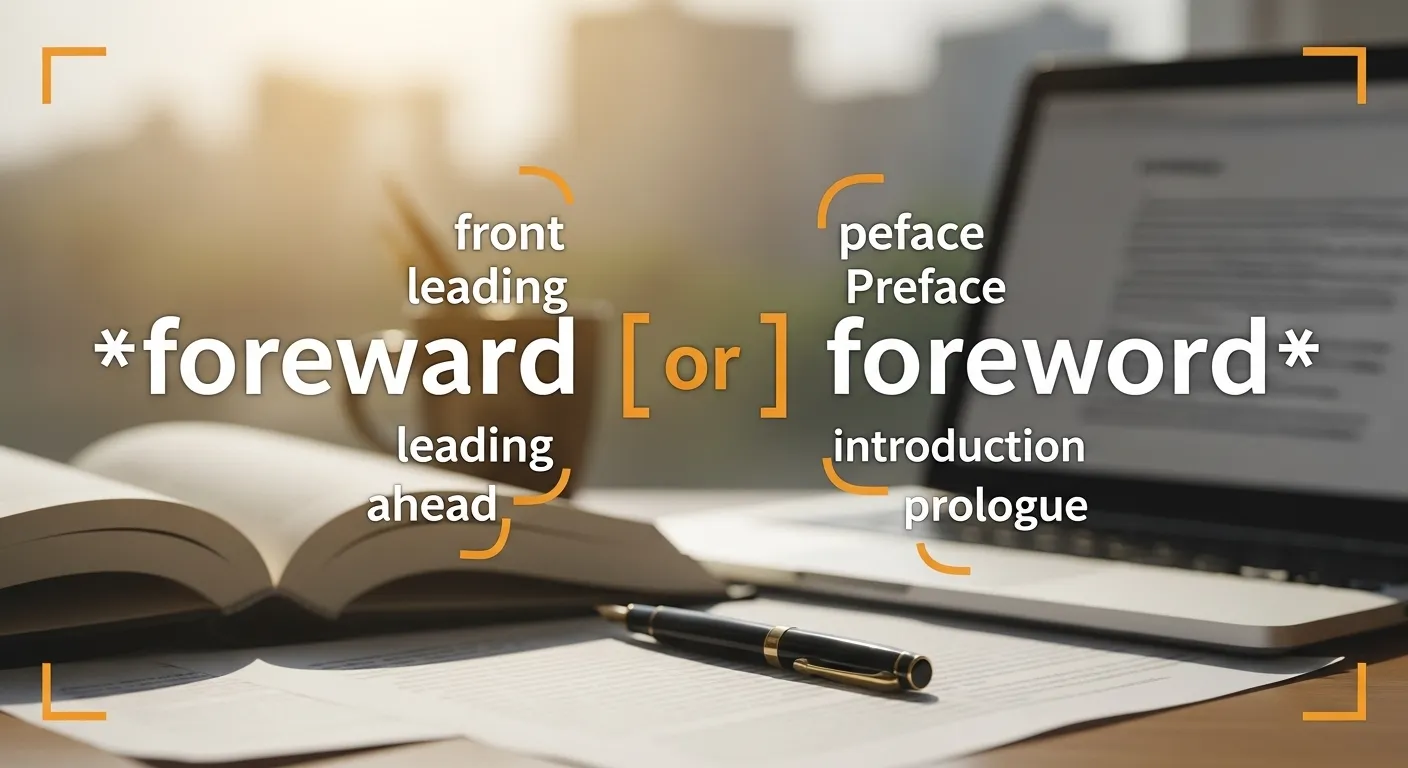
Confused about whether to write foreward or foreword?
The correct spelling is foreword it means the introduction to a book, usually written by someone other than the author.
Many writers make the mistake of using “foreward” because it sounds similar to “forward.”
In this guide, you’ll quickly learn the difference, the origin of the word, correct usage in emails, articles, and books, common mistakes to avoid, and which spelling works for US, UK, and global audiences. By the end, you’ll never mix them up again
Foreward or Foreword – Quick Answer
The correct spelling is “foreword.”
- ✅ Foreword – The introduction to a book or document, usually written by someone other than the author.
- ❌ Foreward – Incorrect spelling, often mistakenly used because it sounds like “forward.”
Example:
The renowned author wrote a touching foreword for the new edition of the novel.
Think of foreword as a formal literary term—it has nothing to do with moving forward or direction.
The Origin of Foreword and Foreward
The word foreword comes from the combination of two Old English words:
- Fore → meaning “before”
- Word → meaning “speech” or “writing”
The term literally means “words before” the main text. It has been used in English since the 15th century to indicate a preface or introduction.
The confusion arises because people associate it with forward, which also starts with “for-” but refers to movement or progress. Over time, this phonetic similarity led to the misspelling foreward, which is widely seen but always considered incorrect in formal writing.
British English vs American English Spelling
Unlike many words that differ between British and American English, foreword is spelled the same way in both.
| Feature | British English | American English |
| Correct spelling | foreword | foreword |
| Incorrect variant | foreward | foreward |
| Usage | Books, articles, formal writing | Books, articles, formal writing |
| Common confusion | Sounds like “forward” | Sounds like “forward” |
Key point: Unlike words like colour/color or theatre/theater, there is no regional difference in the correct spelling of foreword. Both US and UK writers should avoid foreward.
Which Spelling Should You Use?
Always use foreword.
- United States: Use foreword in all books, reports, and professional documents.
- United Kingdom & Commonwealth countries: Use foreword—same as US English.
- Global audience: Always stick to foreword; it is universally recognized and correct.
Tip: If you are proofreading or editing, quickly replace any instance of foreward with foreword to maintain credibility.
Common Mistakes with Foreword or Foreward
Writers frequently make the following errors:
- Using “foreward” instead of “foreword” – Phonetic confusion.
- Confusing foreword with forward – “Forward” relates to direction, not an introduction.
- Capitalization errors – Always capitalize Foreword when it appears as the heading at the beginning of a book.
- Misplacing the foreword – The foreword always comes before the main content, after the title page.
Example Correction:
❌ Incorrect: She wrote a thoughtful foreward.
✅ Correct: She wrote a thoughtful foreword.
Foreword in Everyday Examples
Emails
Dear Team,
Please see the foreword from our CEO before reviewing the annual report.
News Articles
The newspaper published a special edition with a foreword by the editor-in-chief.
Social Media
Excited to share the new book, complete with a heartfelt foreword by my favorite author!
Formal Writing
The textbook includes a detailed foreword by a leading scholar in the field.
Foreword vs Foreward – Google Trends & Usage Data
Data from Google Trends shows that “foreword” is searched consistently across English-speaking countries:
- Top countries: United States, United Kingdom, Canada, Australia, India.
- Seasonal spikes: Often increase around academic semesters, book releases, or literary events.
- Contextual searches: Writers and students search for “foreword examples,” “how to write a foreword,” or “foreword vs preface.”
Insight: The incorrect variant foreward still appears in searches but has much lower traffic and is generally considered a misspelling.
Comparison Table: foreward vs foreword
| Variation | Correct? | Notes |
| foreword | ✅ | Standard spelling for books and documents |
| foreward | ❌ | Common misspelling due to phonetic confusion |
| forward | ❌ | Means “direction,” not an introduction |
| preface | ✅ | Different from foreword; usually written by the author |
FAQs
1. Can I use “foreward” in a book?
No. Always use foreword. “Foreward” is considered incorrect.
2. Is foreword the same as a preface?
Not exactly. A foreword is usually written by someone other than the author; a preface is written by the author.
3. Should “Foreword” be capitalized?
Yes, when it appears as a heading at the start of the book or document.
4. Is “foreword” used in digital content?
Yes, it can be used in blogs, reports, or eBooks to introduce the main content.
5. Does British English spell it differently?
No, foreword is the same in British, American, and Commonwealth English.
6. How do I write a good foreword?
Focus on context, introduce the author or topic, and highlight why the content matters. Keep it short and engaging.
7. Why do people confuse foreword and forward?
Because they sound similar. Foreword relates to writing; forward relates to direction or progress.
Conclusion
Foreword is often confused with forward, but the correct spelling is simple: always use foreword. Capitalize it as a heading and use it in books, reports, emails, or social media.
There’s no difference between US and UK English foreword works everywhere. Using it correctly makes your writing clear, professional, and credible.
Always double check for the common mistake foreward to keep your content polished and precise.