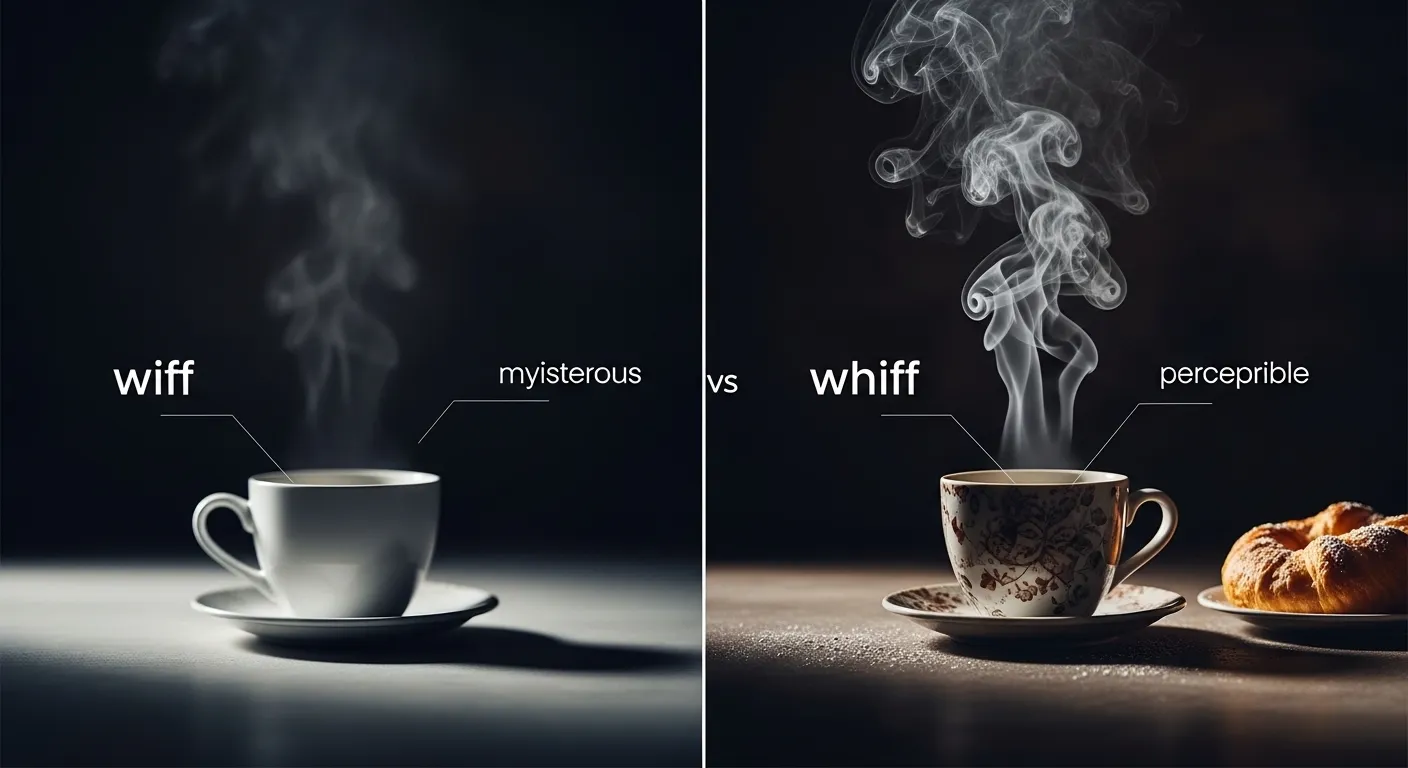
Many people search for “wiff or whiff” because the words sound exactly the same when spoken.
But in writing, only one spelling is correct. This small difference can lead to big mistakes in emails, essays, blog posts, and even professional content.
Spelling errors can hurt your credibility. They can also affect SEO if you target the wrong keyword.
That’s why users want a fast, clear answer. They want to know which spelling is correct and why the confusion exists.
In this quick guide, you’ll learn the correct spelling, the reason behind the mix-up, and how to avoid this mistake forever, Simple, Clear, No confusion.
Wiff or Whiff – Quick Answer
The correct spelling is whiff.
Wiff is incorrect in standard English.
What Does “Whiff” Mean?
Whiff means:
- A light smell
- A small amount of something in the air
- A failed attempt (especially in sports)
Examples:
- I caught a whiff of perfume.
- There was a whiff of smoke in the room.
- The batter took a big swing and missed — total whiff.
If you write “wiff,” it is considered a spelling mistake.
The Origin of Wiff or Whiff
The word whiff comes from 17th-century English. It likely comes from an old imitation of the sound of blowing air.
In early forms of English, many words beginning with “wh” described soft air sounds. For example:
- Whisper
- Whistle
- Whirl
“Whiff” followed this pattern. It described a small puff of air or scent.
Over time, the spelling stayed the same: whiff.
The spelling “wiff” likely appeared because:
- The “h” in “wh” is silent in modern pronunciation.
- In American English, “wh” often sounds like “w.”
Because the “h” is not strongly pronounced today, people sometimes drop it when spelling. That is how “wiff” appears — but it is not correct.
British English vs American English Spelling
There is no spelling difference between British and American English for this word.
Both use whiff.
Unlike words such as:
- Color (US) / Colour (UK)
- Center (US) / Centre (UK)
The word whiff stays the same in both systems.
Comparison Table
| Version | Correct Spelling | Used In | Notes |
|---|---|---|---|
| American English | Whiff | United States | Standard spelling |
| British English | Whiff | UK | Same spelling |
| Australian English | Whiff | Australia | Same spelling |
| Canadian English | Whiff | Canada | Same spelling |
| Incorrect Form | Wiff | Nowhere officially | Spelling mistake |
So, no matter where you live, whiff is correct.
Which Spelling Should You Use?
The answer is simple: always use whiff.
If You Are in the United States:
Use whiff in all writing — academic, business, online, or casual.
If You Are in the UK or Commonwealth:
Still use whiff.
If You Write for a Global Audience:
Use whiff. It is universally accepted.
There is no situation where “wiff” is the standard spelling.
If you use spell check, most tools will automatically correct “wiff” to “whiff.”
Common Mistakes with Wiff or Whiff
Here are frequent errors people make:
1. Dropping the “H”
❌ I smelled a wiff of gas.
✅ I smelled a whiff of gas.
2. Using It as a Verb Incorrectly
Correct usage:
- He whiffed at the pitch. (sports)
3. Confusing Meaning
“Whiff” means a small smell or a miss in sports.
It does NOT mean:
- Strong odor
- Success
- Loud sound
4. Typing Errors
Sometimes people type fast and skip the “h.” This is common on phones.
Whiff or Wiff in Everyday Examples
Here is how whiff is used in daily life.
In Emails:
- There is a whiff of confusion in the proposal.
- I noticed a whiff of smoke near the server room.
In News:
- The market crash had a whiff of panic.
- There was a whiff of scandal around the deal.
On Social Media:
- I caught a whiff of drama in that comment section.
- That speech had a whiff of sarcasm.
In Formal Writing:
- The report contains a whiff of bias.
- Investigators detected a whiff of gas.
In Sports:
- The striker took a shot and whiffed.
- Another swing, another whiff.
Wiff Vs Whiff – Google Trends & Usage Data
Search data shows that:
- “Whiff” is widely used in the United States.
- It is also common in the UK, Canada, and Australia.
- “Wiff” appears mostly as a misspelling.
Most searches for “wiff” happen because:
- People hear the word spoken.
- They are unsure about the silent “h.”
- They want spelling confirmation.
In published books, newspapers, and academic writing, whiff is the only accepted spelling.
Search engines recognize “wiff” as an error and often suggest:
“Did you mean: whiff?”
This shows strong usage dominance of whiff globally.
Comparison Table – Wiff vs Whiff
| Feature | Wiff | Whiff |
|---|---|---|
| Correct Spelling | ❌ No | ✅ Yes |
| Dictionary Accepted | ❌ No | ✅ Yes |
| Used in US | ❌ No | ✅ Yes |
| Used in UK | ❌ No | ✅ Yes |
| Meaning | None | Light smell / Miss in sports |
| Professional Writing | ❌ Never | ✅ Always |
FAQs
1. Is “wiff” ever correct?
No. “Wiff” is not a correct spelling in standard English.
2. Why do people spell it as “wiff”?
Because the “h” is silent in pronunciation.
3. Does British English use “wiff”?
No. Both British and American English use whiff.
4. What does “whiff” mean in sports?
It means to swing and miss, especially in baseball.
5. Can “whiff” be used as a verb?
Yes.
- He whiffed at the ball.
6. Is “whiff” formal or informal?
It can be both. It works in casual and professional writing.
7. Is “whiff” positive or negative?
It depends on context. A whiff of perfume is neutral or pleasant. A whiff of scandal is negative.
Conclusion:
The confusion between wiff or whiff is simple but common. The words sound the same, but only one spelling is correct. The right spelling is whiff.
It is accepted in American English, British English, and all global forms of English. The spelling “wiff” is always a mistake.
The confusion happens because the “h” in “wh” is silent in modern pronunciation. Many people write the word exactly as they hear it.
But English spelling does not always match pronunciation.
To write clearly and professionally, always use whiff.
If you are sending an email, writing a report, posting on social media the correct spelling builds trust and credibility.
If you ever feel unsure, remember this rule:
If it means a small smell or a missed swing, spell it W-H-I-F-F.
Now you can write with confidence.

I’m American writer known for precise, economical use of language and strong narrative voice. My work is frequently studied for sentence rhythm, word choice, and how meaning is shaped through grammar, making it valuable for close reading and English comparison studies.