Many people search for “been or being” because these two words look similar but follow different grammar rules.
Both are correct, yet they cannot be used in the same situations. This confusion often leads to mistakes in emails, exams, essays, and online writing.
This guide explains the difference in simple terms, shows correct usage with examples, and clears up common doubts so you can choose the right word with confidence every time.
Been or Being – Quick Answer
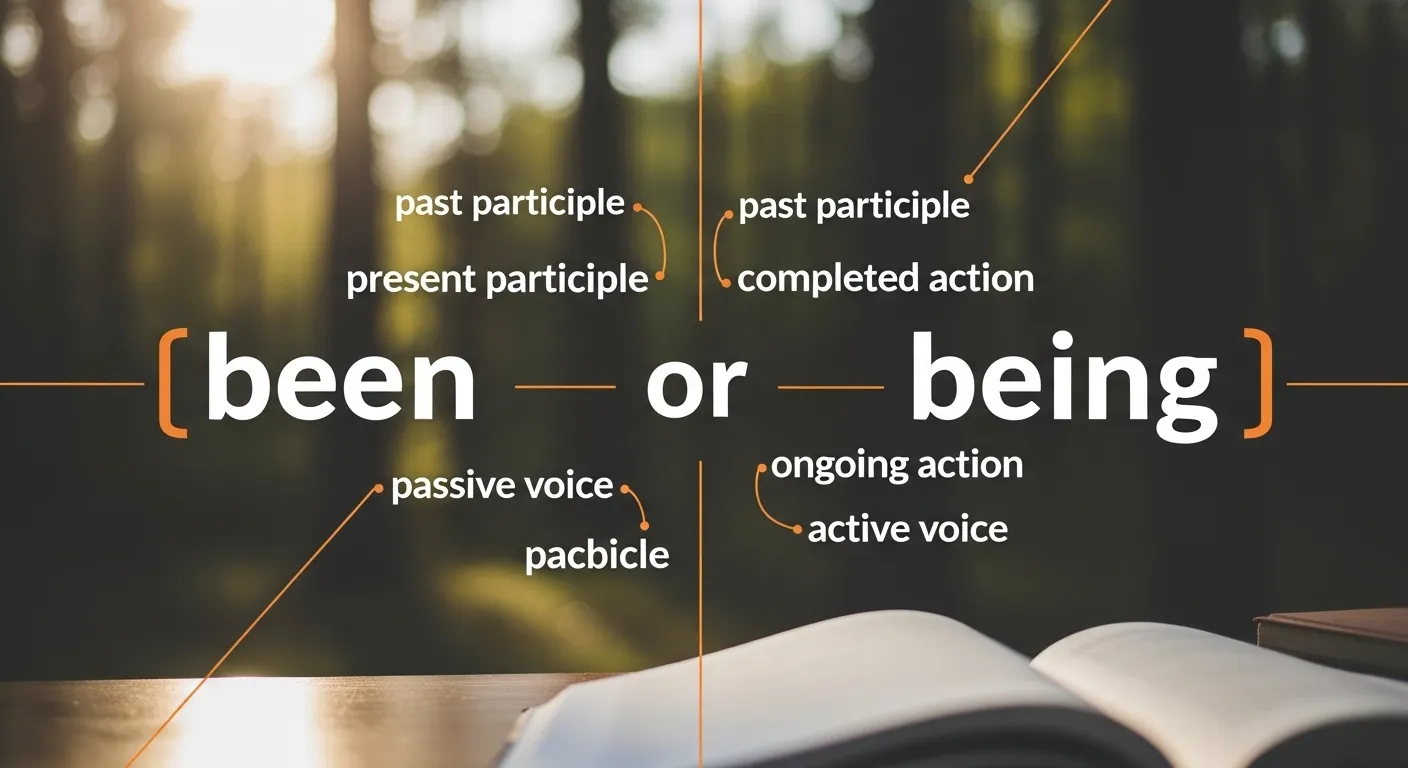
Been is the past participle of the verb to be.
Being is the present participle and is used to show an ongoing state or action.
Simple Examples
- I have been tired all day. ✅
- She is being helpful today. ✅
Easy Rule to Remember
- Use been after have / has / had
- Use being after am / is / are / was / were
They do not mean the same thing and cannot replace each other.
The Origin of Being or Been
Both been and being come from the Old English verb “bēon,” which meant to exist or remain. Over time, English developed different verb forms to show tense, time, and continuity.
Historical Background
- Been developed as a past participle
- Being developed as a present participle / gerund
English kept these forms instead of simplifying them. This is why modern English still has:
- am / is / are
- was / were
- been
- being
The confusion exists because English learners expect one form—but English uses multiple forms for meaning, not logic.
British English vs American English Spelling
Good news: there is NO spelling difference between British and American English for been or being.
Both varieties use:
- been → B-E-E-N
- being → B-E-I-N-G
What Does Differ?
Only pronunciation, not spelling.
| Word | British Pronunciation | American Pronunciation |
| been | /biːn/ (“been”) | /bɪn/ (“bin”) |
| being | /ˈbiːɪŋ/ | /ˈbiːɪŋ/ |
Key Point
Spelling rules are identical worldwide. If you are unsure, focus on grammar, not region.
Which Spelling Should You Use?
Since both forms are correct, your choice depends on sentence structure, not audience.
Use been when:
- Talking about past experience
- Using have / has / had
Examples
- I have been to London.
- She had been sick before the exam.
Use being when:
- Describing current behavior or state
- Showing something temporary or ongoing
Examples
- He is being rude.
- Thank you for being honest.
Global Writing Tip
For academic, professional, and online content:
✔ Follow grammar rules
✔ Ignore accent or pronunciation
✔ Focus on sentence structure
Common Mistakes with Been or Being
These errors are extremely common and easy to fix.
❌ Mistake 1: Using being after have
- ❌ I have being busy.
- ✅ I have been busy.
Mistake 2: Using been after is
- ❌ She is been kind.
- ✅ She is being kind.
Mistake 3: Mixing tense meaning
- ❌ He has being late all week.
- ✅ He has been late all week.
❌ Mistake 4: Confusing behavior vs identity
- ❌ He is been stupid.
- ✅ He is being stupid.
(“Being” shows temporary behavior.)
Been or Being in Everyday Examples
Emails
- I have been waiting for your reply.
- Thank you for being patient.
News Writing
- The minister has been under pressure.
- The company is being investigated.
Social Media
- I’ve been so busy lately.
- Stop being negative.
Formal Writing
- The policy has been revised.
- Participants are being monitored.
Been or Being – Google Trends & Usage Data
Search data shows that “been or being” is most commonly searched by:
- Students
- ESL learners
- Content writers
- Exam candidates
Popular Search Regions
- India
- Pakistan
- UK
- USA
- Australia
Why People Search
- Grammar confusion
- Exam preparation
- Professional writing accuracy
“Been” appears more often in past-focused content, while “being” appears in descriptive and ongoing contexts.
Been or Being Comparison Table
| Feature | Been | Being |
| Grammar role | Past participle | Present participle |
| Used with | have / has / had | am / is / are |
| Shows | Past or completed state | Ongoing or temporary state |
| Can act as noun | ❌ | ✅ |
| Example | I have been ready | He is being careful |
FAQs:
1. Is “been” or “being” correct?
Both are correct. Use been for past states and being for ongoing actions.
2. Can I use “being” after “have”?
No. After have, always use been.
3. Is there a British or American difference?
No spelling difference. Only pronunciation changes.
4. Which one is more formal?
Both are equally formal when used correctly.
5. Can “being” be a noun?
Yes. Example: Human being.
6. Why does “been” sound like “bin”?
That is American pronunciation, not spelling.
7. Which one is correct for exams?
Use the form that matches the verb structure of the sentence.
Conclusion:
The confusion between been or being is common, but it becomes easy once you understand their roles. Been talks about the past and always follows have, has, or had. Being describes something happening now or temporarily and follows am, is, are, was, or were.
There is no spelling difference between British and American English, so your focus should always be grammar, not region. Many writing mistakes happen because people choose the word that sounds right, not the one that fits the structure.
For professional emails, academic work, exams, and online content, using the correct form improves clarity and credibility. When in doubt, check the helping verb before the word. That one step will solve most errors instantly.
Mastering small grammar choices like been vs being builds confidence and precision in your writing and that is what clear English is all about.

I’m English language author writing emphasises clarity, structure, and close attention to language. My work is often examined for stylistic comparison, focusing on Grammar work, narrative control, and subtle thematic development.