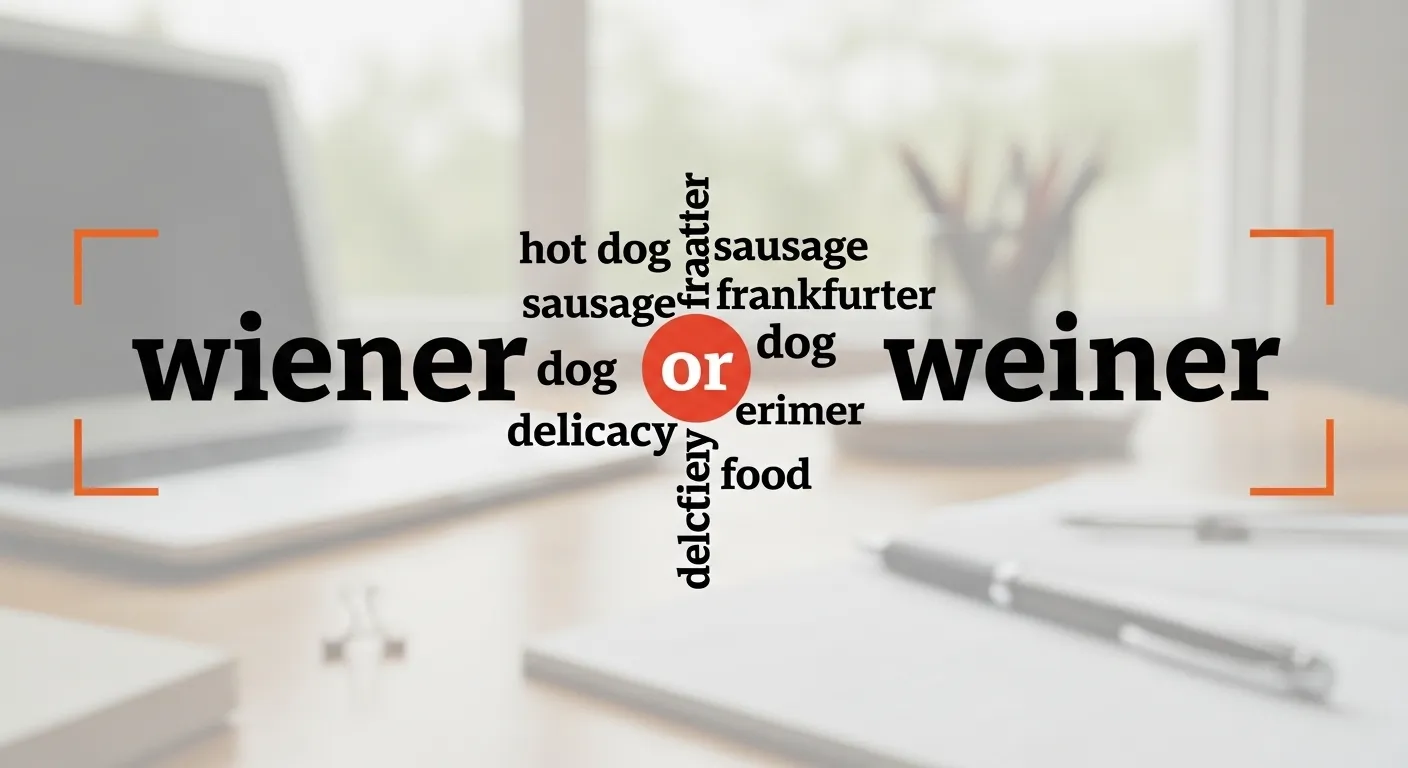
When searching “wiener or weiner,” most people just want to know the correct spelling. The answer: use “wiener” for hot dogs or sausages, and “Weiner” only as a surname.
This confusion happens because both sound the same, but using the wrong spelling can look unprofessional.
This guide quickly explains the difference, the origins, British vs. American usage, and common mistakes so you’ll always know which to use.
Wiener or Weiner – Quick Answer
The short answer is:
- Wiener → Correct spelling for sausages and the Austrian origin word. Used globally in culinary and general contexts.
- Example: “I bought a wiener from the food stall.”
- Weiner → Usually a surname or slang term. Not correct when referring to sausages.
- Example: “Senator Weiner announced his resignation.”
✅ Tip: If you mean the sausage or the hot dog, always use wiener. Use Weiner only as a proper noun (name).
The Origin of Wiener or Weiner
The word wiener comes from the German term “Wiener Würstchen”, meaning “Viennese sausage.” In German, “Wien” is Vienna, the capital of Austria. Over time, English speakers shortened it to wiener, especially in the U.S., referring to hot dogs or sausages made in that style.
The spelling weiner is mostly a surname of German origin, unrelated to the sausage. Confusion occurs because both words are pronounced the same in English: /ˈwiːnər/.
Historically, the misuse of weiner for the sausage likely comes from phonetic spelling. Some writers assumed the “ei” in English should sound like “ee,” which is not the case.
Key takeaway: The original culinary term is wiener, and this is the only correct spelling when talking about food.
British English vs American English Spelling
In British and American English, the spelling wiener remains consistent when referring to sausages. There is no British alternative like “weiner” for food. However, confusion sometimes arises because English speakers unfamiliar with German phonetics may mistakenly use weiner.
Here’s a quick comparison:
| Word | Meaning | Usage Region | Correctness |
| Wiener | Sausage / hot dog | US, UK, Global | ✅ Correct |
| Weiner | Surname / slang term | US, UK | ✅ Only as proper noun |
| Wiener | Adjective: from Vienna | US, UK, Global | ✅ Correct |
| Weiner | Misspelling of sausage | US, UK | ❌ Incorrect |
Example sentences:
- US English: “I enjoyed a grilled wiener at the barbecue.”
- UK English: “The wiener was served with mustard and bread.”
Tip: Never use weiner to refer to the sausage in formal writing. Only use Weiner as a last name.
Which Spelling Should You Use?
- If you are in the U.S.: Always use wiener for hot dogs or sausages. Use Weiner if referring to a person’s last name.
- If you are in the UK or Commonwealth countries: Same rules apply. The word for the sausage is wiener, borrowed directly from German.
- For international audiences: Wiener is recognized worldwide as the standard spelling for food. Avoid “weiner” unless it is a name.
Audience-based tip: Using the wrong spelling can appear unprofessional in blogs, emails, or social media posts. Stick to wiener for clarity.
Common Mistakes with Wiener or Weiner
Many writers and social media users make the following errors:
- Writing “weiner” for hot dogs: ❌ Incorrect
- Wrong: “I had a weiner for lunch.”
- Correct: “I had a wiener for lunch.”
- Confusing surnames with food:
- Example: “Congressman Wiener spoke today about hot dogs.” ❌
- Correct: “Congressman Weiner spoke today about legislation.” ✅
- Using “wiener” as slang incorrectly:
- Slang use should match context. For example, calling someone a “wiener” informally is okay, but in professional writing, avoid it.
- Mispronouncing German origin words:
- Say “Vee-ner” (like in Vienna) rather than “Way-ner.”
Weiner or Wiener in Everyday Examples
Emails:
- Formal: “Please include hot dogs (wieners) in the catering order.”
- Casual: “Grab me a wiener at the picnic, please!”
News:
- Correct: “The festival served over 2,000 wieners to attendees.”
- Incorrect: “The festival served over 2,000 weiners to attendees.”
Social Media:
- Correct: “Who else loves a grilled wiener on a summer day?”
- Slang caution: Avoid confusing Weiner as a hot dog reference.
Formal writing:
- “The recipe calls for Vienna-style wieners, served with mustard and sauerkraut.”
Weiner vs Wiener – Google Trends & Usage Data
Data from Google Trends shows that searches for wiener spike in summer months, particularly around barbecue season in the U.S. Popularity is highest in the United States, followed by the UK, Canada, and Australia.
Search volume context:
- “Wiener” (food-related): Peaks in May–July in the U.S.
- “Weiner” (surname): Stable year-round, mostly news-related.
This indicates that most online searches are indeed about sausages, reinforcing that wiener is the correct choice for culinary content.
Wiener vs Weiner: Comparison Table
| Aspect | Wiener | Weiner |
| Pronunciation | /ˈwiːnər/ | /ˈwiːnər/ |
| Meaning | Sausage, hot dog | Surname, slang term |
| Origin | German “Wiener Würstchen” | German surname |
| Correct for food usage | ✅ Yes | ❌ No |
| Correct for name usage | ❌ No | ✅ Yes |
| US English usage | Standard | Proper noun only |
| UK English usage | Standard | Proper noun only |
FAQs
1. Is it “wiener” or “weiner” for hot dogs?
- Always use wiener when referring to hot dogs or sausages.
2. Can “Weiner” ever be used for food?
- No, Weiner is only a surname or slang. It is never correct for culinary use.
3. Why do people confuse the spelling?
- English speakers sometimes spell phonetically, assuming “ei” sounds like “ee.” The original German spelling is wiener.
4. Is “wiener” British or American English?
- It is used in both, borrowed from German. The spelling does not change.
5. Can “wiener” be used as slang?
- Yes, informally, it can refer to a foolish person. Avoid in professional or formal contexts.
6. How should I pronounce “wiener”?
- Say “Vee-ner”, like in Vienna, Austria.
7. Are there alternative words for wiener?
- Yes: hot dog, frankfurter, sausage. But wiener remains standard for Vienna-style sausages.
Conclusion
In short, the spelling wiener is correct for hot dogs and sausages, while Weiner is only a surname. Both British and American English follow this rule, so using wiener keeps your writing clear and professional.
Avoid common mistakes like using “weiner” for food or confusing it with names. Knowing the origin and proper usage lets you write confidently in emails, blogs, social media, or recipes.
When in doubt, stick with wiener it’s the globally recognized, professional choice.

I’m American writer known for precise, economical use of language and strong narrative voice. My work is frequently studied for sentence rhythm, word choice, and how meaning is shaped through grammar, making it valuable for close reading and English comparison studies.