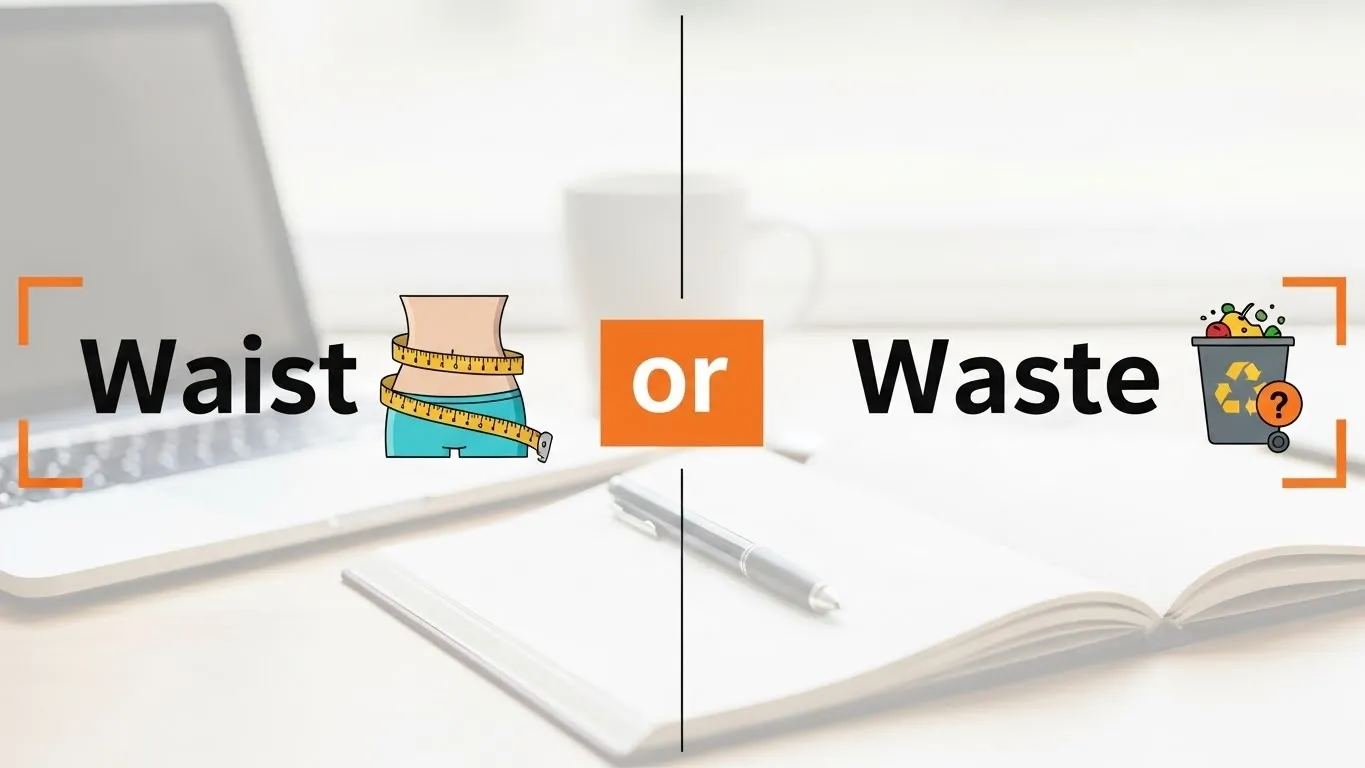
The confusion between waist and waste is common because the words sound alike but mean very different things.
Waist refers to a part of the body, while waste means throwing something away or using it carelessly.
A single wrong letter can completely change your message.
This guide explains the difference with clear examples and simple tips so you’ll always choose waist or waste with confidence.
Waist or Waste – Quick Answer
Waist refers to a part of the human body.
Waste refers to something unwanted, unused, or thrown away.
Examples:
- She measured her waist before buying jeans.
- The company is working to reduce plastic waste.
- He tied a belt around his waist.
- Leaving lights on is a waste of electricity.
Simple rule:
👉 Body = waist
👉 Trash, loss, or misuse = waste
The Origin of Waste or Waist
Understanding the origin of these words makes the difference easier to remember.
Origin of Waist
The word waist comes from Old English wæst, meaning “growth” or “stature.” Over time, it became associated with the middle part of the human body, especially between the ribs and hips. By the Middle English period, waist clearly referred to body shape and size.
Origin of Waste
Waste comes from Old French waster, meaning “to spoil, devastate, or squander.” It entered English through Latin roots meaning “empty” or “desolate.” This explains why waste is linked to loss, garbage, excess, and misuse.
Why the Confusion Exists
The confusion exists because:
- Both words are pronounced the same.
- They differ by only one letter.
- English spelling does not always match pronunciation.
Despite sounding identical, their meanings never overlap.
British English vs American English Spelling
Unlike many English spelling debates, waist or waste is not a regional issue. Both British English and American English use the same spelling and meanings.
Key Point
There is no British or American variation here. The confusion is purely about meaning, not spelling standards.
Comparison Table: British vs American Usage
| Word | British English | American English | Meaning |
| Waist | Waist | Waist | Body part |
| Waste | Waste | Waste | Trash, loss, misuse |
✔ Same spelling
✔ Same meaning
✔ Same usage worldwide
Which Spelling Should You Use?
Choosing between waist or waste depends entirely on context, not location.
Use Waist if:
- You are talking about the body
- Clothing size or measurement
- Fitness or health
Examples:
- Waist size
- Slim waist
- Waist pain
- Waistline
Use Waste if:
- You are talking about garbage
- Losing time, money, or energy
- Environmental issues
- Overuse or inefficiency
Examples:
- Food waste
- Waste of time
- Industrial waste
- Waste management
Global Writing Tip
If you write for a global audience, accuracy matters more than region. Using the correct word improves trust, clarity, and SEO performance.
Common Mistakes with Waist or Waste
Many mistakes happen because people write based on sound instead of meaning.
Mistake 1: Using waste for body parts
❌ He has pain in his waste
✔ He has pain in his waist
Mistake 2: Using waist for trash or loss
❌ This policy reduces plastic waist
✔ This policy reduces plastic waste
Mistake 3: Confusing fitness and environment
❌ Exercise helps reduce waste
✔ Exercise helps reduce waist
Correction Tip
Pause and ask: Am I talking about the body or about loss?
That one question fixes most errors.
Waist or Waste in Everyday Examples
Emails
- Please dispose of all office waste properly.
- The dress fits perfectly around the waist.
News
- Governments aim to cut food waste.
- Fashion trends now focus on high waist jeans.
Social Media
- Trying to lose my waist fat this summer.
- Stop single-use plastic waste now!
Formal Writing
- The study examines waste reduction strategies.
- Measurements were taken at the waist level.
Waist or Waste – Google Trends & Usage Data
Search data shows that waste is searched more often than waist.
Why Waste Is More Popular
- Environmental topics
- Climate change discussions
- Recycling and sustainability
- Business efficiency
Why Waist Is Still Important
- Health and fitness
- Clothing and fashion
- Medical writing
Usage by Context
| Context | More Common Word |
| Environment | Waste |
| Fitness | Waist |
| Fashion | Waist |
| Industry | Waste |
| Health | Waist |
Both words are widely used, but in very different fields.
Comparison Table: Waist vs Waste
| Feature | Waist | Waste |
| Part of speech | Noun | Noun / Verb |
| Meaning | Body part | Loss, trash |
| Related topics | Health, clothing | Environment, efficiency |
| Can be plural | Waists | Wastes |
| Common phrases | Waistline, waist size | Waste management, waste time |
FAQs:
1. Is it waist or waste when talking about body fat?
It is waist. Body fat relates to the body, not trash.
2. Is “waste of time” correct?
Yes. Waste is correct because it means loss or misuse.
3. Are waist and waste pronounced the same?
Yes. They are homophones, which causes confusion.
4. Can waste be a verb?
Yes. You can waste time, money, or resources.
5. Is there a British or American difference?
No. Both words are spelled and used the same worldwide.
6. Can waist ever mean trash?
No. Waist always refers to the body.
7. How can I remember the difference?
Think “W-A-I-S-T = I sit at my waist.”
Think “Waste = trash and loss.”
Conclusion:
The difference between waist and waste is simple but important.
Waist refers to the body, while waste refers to loss, trash, or misuse. Their meanings never overlap.
Link waist to the body and waste to loss, and the confusion disappears.
One quick question helps every time: body or loss? That’s your answer.
Using the correct word improves clarity, professionalism, and trust in all types of writing.
Discover More About:
Rode or Road: What’s the Difference?
Citing or Siting – Which One is Correct?

I’m English language author writing emphasises clarity, structure, and close attention to language. My work is often examined for stylistic comparison, focusing on Grammar work, narrative control, and subtle thematic development.