English has many words that sound the same but mean different things. Sight and site are a common example. People often hear these words but get confused when writing them.
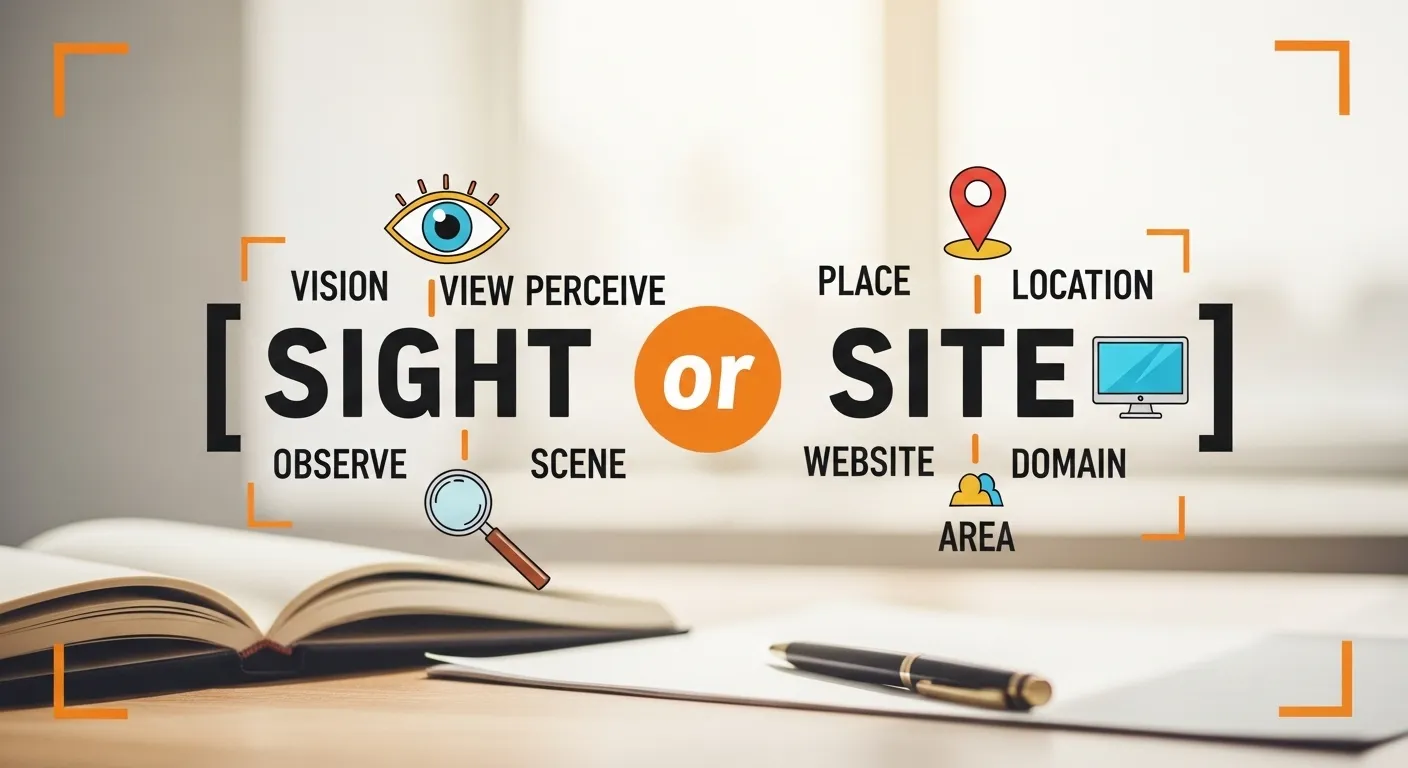
The difference is simple: sight relates to seeing or vision, while site refers to a place or location. For example, “The sunset was a beautiful sight” versus “This is the site of the new school.”
In this guide, you’ll quickly learn the difference between sight or site, how to use them correctly, common mistakes to avoid, and real-life examples to write confidently every time.
Sight or Site – Quick Answer
The difference between sight and site is easy once you know their meanings.
| Word | Meaning | Example |
| Sight | The ability to see or something you see | The sunset was a beautiful sight. |
| Site | A place or location | This is the site of the new school. |
Sight
Sight is related to vision or something you see.
Examples:
- The mountains were a stunning sight.
- He lost his sight in the accident.
- The view is worth seeing at first sight.
Site
Site refers to a physical place or location.
Examples:
- This is the construction site.
- The company chose a new site for its office.
- The website is under maintenance (web site).
👉 Simple rule:
- Sight = seeing
- Site = place
The Origin of Sight or Site
Understanding the history of these words makes the difference clearer.
Origin of Sight
The word sight comes from Old English “sihth”, which means vision or the act of seeing. Over time, the spelling changed, but the meaning stayed the same.
It has always been connected to:
- Eyes
- Vision
- Things you can see
Origin of Site
The word site comes from the Latin word “situs,” meaning position or location. It entered English through Old French.
From the beginning, site has always referred to:
- A place
- A position
- A location
Even though both words sound the same today, their origins are completely different.
British English vs American English Spelling
Unlike many English words, sight and site have the same spelling in both British and American English. There is no variation.
Comparison Table
| Word | British English | American English | Meaning |
| Sight | Sight | Sight | Vision or something seen |
| Site | Site | Site | Place or location |
Examples
British English
- The castle is a historic sight.
- This is the site of the old factory.
American English
- The Grand Canyon is an amazing sight.
- The new office site is ready.
✔ Spelling stays the same globally.
✔ Only meaning changes based on context.
Which Spelling Should You Use?
Choosing between sight or site depends on what you want to say.
Use Sight When Talking About Vision
Use sight when referring to:
- Seeing
- Views
- Things visible
Examples:
- The ocean view is a beautiful sight.
- He has poor sight.
- The city lights are a great sight at night.
Use Site When Talking About Place
Use site when referring to:
- Location
- Area
- Position
Examples:
- This is a construction site.
- The event will take place at a new site.
- Visit our website for more details.
Audience-Based Advice
| Audience | Usage |
| United States | Same spelling (sight / site) |
| United Kingdom | Same spelling (sight / site) |
| Australia / Canada | Same spelling |
| Global | Choose based on meaning |
👉 Key tip:
- If it’s about eyes → sight
- If it’s about place → site
Common Mistakes with Site or Sight
These words are often confused in writing.
Mistake 1
❌ Incorrect:
- This is a beautiful site to see.
✅ Correct:
- This is a beautiful sight to see.
👉 Explanation: Talking about something you see.
Mistake 2
❌ Incorrect:
- The construction sight is closed.
✅ Correct:
- The construction site is closed.
👉 Explanation: Refers to a place.
Mistake 3
❌ Incorrect:
- I lost my site after the accident.
✅ Correct:
- I lost my sight after the accident.
👉 Explanation: Refers to vision.
Quick Memory Trick
- Sight → See (both start with “S”)
- Site → Place (location)
Site vs Sight in Everyday Examples
In Emails
- The view from your office is a beautiful sight.
- Please visit our site for more information.
In News
- The historic monument is a popular tourist sight.
- The government approved a new building site.
In Social Media
- Sunset today was an amazing sight!
- Check out my new site link in bio.
In Professional Writing
- The project site is under development.
- The results were a surprising sight.
Sight or Site – Google Trends & Usage Data
Many people search for sight or site because of confusion in spelling.
Common Search Queries
- sight vs site meaning
- sight or site difference
- which is correct sight or site
- sight in or site in
Usage by Context
| Context | Common Word |
| Vision / eyes | Sight |
| Tourism | Sight |
| Construction | Site |
| Websites | Site |
Popular Countries Searching
- United States
- United Kingdom
- India
- Canada
- Australia
This shows that confusion between sight and site is common worldwide.
Sight vs Site: Comparison Table
| Feature | Sight | Site |
| Meaning | Vision or something seen | Place or location |
| Category | Senses | Location |
| Example | A beautiful sight | Construction site |
| Usage | Eyes, view | Place, website |
FAQs
1. Are sight and site homophones?
Yes, they sound the same but have different meanings and spellings.
2. What does sight mean?
Sight means the ability to see or something visible.
3. What does site mean?
Site means a place or location.
4. Is website spelled with site?
Yes, website uses “site” because it refers to a location on the internet.
5. How do I remember sight vs site?
- Sight = see
- Site = place
6. Can sight be used as a verb?
Yes. Example:
- We sighted a bird in the forest.
7. Is “sight to see” correct?
Yes, it means something worth seeing.
Conclusion
The confusion between sight or site is common because they sound the same, but their meanings are different. Sight is about vision or something you see, while site refers to a place, location, or website.
The spelling is the same in British and American English, so just focus on meaning: sight = seeing, site = location. Using the right word makes your writing clear, professional, and easy to understand.

I’m English language author writing emphasises clarity, structure, and close attention to language. My work is often examined for stylistic comparison, focusing on Grammar work, narrative control, and subtle thematic development.