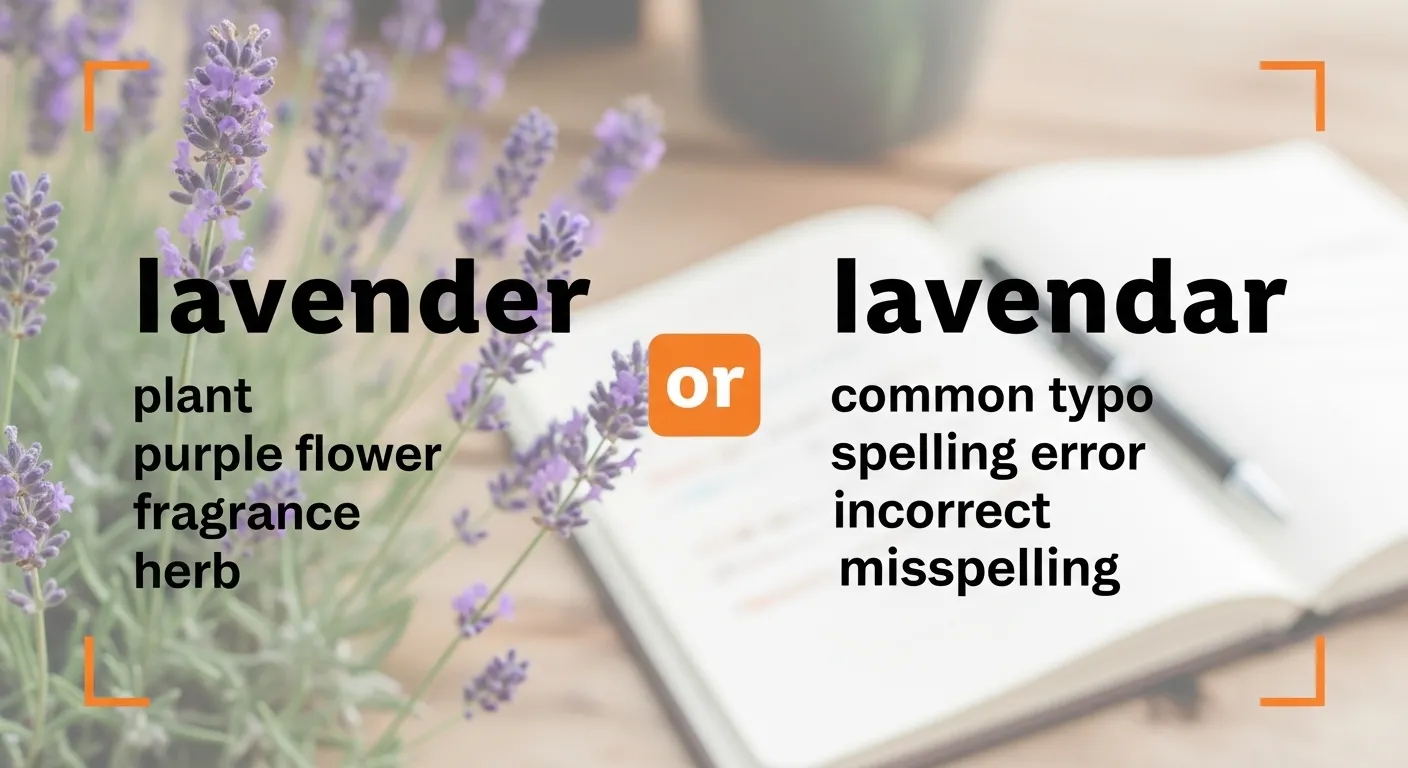
You may have seen lavender and lavendar online in blogs, labels, or social posts. They look similar, but only one is correct.
Quick answer for you: The correct spelling is lavender. “Lavendar” is wrong.
Many people search “lavendar or lavender” to avoid mistakes in emails, exams, or SEO writing. The answer is simple, yet often confused. English spelling doesn’t always follow sound it follows history.
In this guide, you’ll quickly learn the correct spelling, why the mistake happens, and how to avoid it forever using clear examples and easy tips.
Lavender or Lavendar – Quick Answer
The correct spelling is: lavender ✅
Lavendar is incorrect ❌
Simple Rule:
- Use lavender in all cases.
- Avoid lavendar completely.
Examples:
- Correct: I love the smell of lavender.
- Wrong: I love the smell of lavendar.
- Correct: She bought lavender oil.
- Wrong: She bought lavendar oil.
👉 There is no situation where “lavendar” is correct in standard English.
The Origin of Lavender
The word lavender comes from the Latin word lavare, which means “to wash.”
In ancient times, people used lavender in baths and for cleaning. That is why the name stayed connected to washing and freshness.
History of the Word:
- Latin: lavare (to wash)
- Old French: lavandre
- English: lavender
The spelling has stayed stable over time. It did not change into “lavendar.”
Why the Confusion Exists
The confusion happens because:
- Many English words end in -ar (like calendar, popular).
- People guess the spelling by sound.
- Autocorrect does not always fix it.
But lavender does not follow that pattern. It keeps the -er ending from its origin.
British English vs American English Spelling
Good news: There is no difference between British and American English here.
Both use lavender.
Comparison Table
| Version | Correct Spelling | Example Sentence |
| British English 🇬🇧 | Lavender | The garden has fresh lavender. |
| American English 🇺🇸 | Lavender | She planted lavender in her yard. |
| Incorrect ❌ | Lavendar | This is not a correct spelling. |
👉 Unlike words like color/colour, this word does not change by region.
Which Spelling Should You Use?
Always use lavender.
Based on Audience:
- US audience: Use lavender
- UK audience: Use lavender
- Global audience: Use lavender
There is no need to think twice. One correct form works everywhere.
Pro Tip:
If you are writing:
- Blogs
- SEO articles
- Emails
- Academic content
Always double-check spelling. Even small errors affect credibility.
Common Mistakes with Lavender
Here are common errors people make:
1. Writing “Lavendar”
❌ Wrong: I like lavendar candles.
✅ Correct: I like lavender candles.
2. Mixing Spellings
❌ Wrong: Lavender oil smells better than lavendar soap.
✅ Correct: Lavender oil smells better than lavender soap.
3. Spelling by Sound
Some people write what they hear:
- “lav-en-dar” → lavendar ❌
- Correct spelling stays lavender ✅
4. Ignoring Spell Check
Always use tools like Grammarly or built-in spell check.
Lavender in Everyday Examples
1. Emails
- Please send lavender essential oil samples.
2. Social Media
- Loving this lavender aesthetic 💜
3. News Writing
- Farmers reported high demand for lavender crops.
4. Academic Writing
- Lavender has calming properties.
5. Business Content
- Our brand offers natural lavender skincare products.
👉 In all cases, spelling stays the same.
Lavender – Google Trends & Usage Data
The keyword lavender is very popular worldwide.
Where It’s Popular:
- United States
- United Kingdom
- Canada
- Australia
- India & Pakistan
People search it for:
- Essential oils
- Skincare
- Gardening
- Aromatherapy
Usage Insight:
- “Lavender” gets high search volume
- “Lavendar” gets very low or mistaken searches
👉 Using the correct spelling helps:
- Better SEO ranking
- Higher trust
- More clicks
Comparison Table: Lavender vs Lavendar
| Feature | Lavender ✅ | Lavendar ❌ |
| Correct Spelling | Yes | No |
| Used Worldwide | Yes | No |
| SEO Friendly | Yes | No |
| Found in Dictionary | Yes | No |
| Professional Use | Yes | No |
FAQs
1. Is lavendar ever correct?
No. “Lavendar” is always incorrect.
2. Why do people write lavendar?
Because they guess the spelling from sound or confuse it with similar words.
3. Is lavender the same in US and UK?
Yes. Both use the same spelling.
4. What does lavender mean?
It is a plant known for its fragrance and purple color.
5. How can I remember the correct spelling?
Think: lav-end-er → ends with “ER,” not “AR.”
6. Is lavender used in SEO keywords?
Yes. It is popular in health, beauty, and lifestyle content.
7. Does autocorrect fix lavendar?
Sometimes, but not always. Always check manually.
Conclusion
The confusion between lavender and lavendar is common, but the answer is simple: lavender is the only correct spelling in all contexts.
This mistake happens because people follow sound, not spelling rules. But English often follows history, not logic so the original form stays.
Using the correct spelling makes your writing look professional, improves SEO, and builds trust. It also helps your content rank better on search engines and avoids confusion for readers.
Next time, just pause and check: is it lavender? If yes, you’re right. Consistent practice makes this spelling easy to remember and use correctly every time in writing.