If you have ever typed iland and seen a red underline, you are not alone. Many people search for “iland or island” because the spelling feels strange.
The word island has a silent “s.” We do not hear it when we speak, so writing iland feels natural. But English spelling is not always based on sound.
This mistake is common in schoolwork, blogs, emails, and even business writing.
A small spelling error can hurt your grades, SEO rankings, or professional image.
In this quick guide, you will get a clear answer first.
Then you will learn the simple rule, the word’s history, and easy examples. By the end, you will never confuse iland or island again.
Iland or Island – Quick Answer
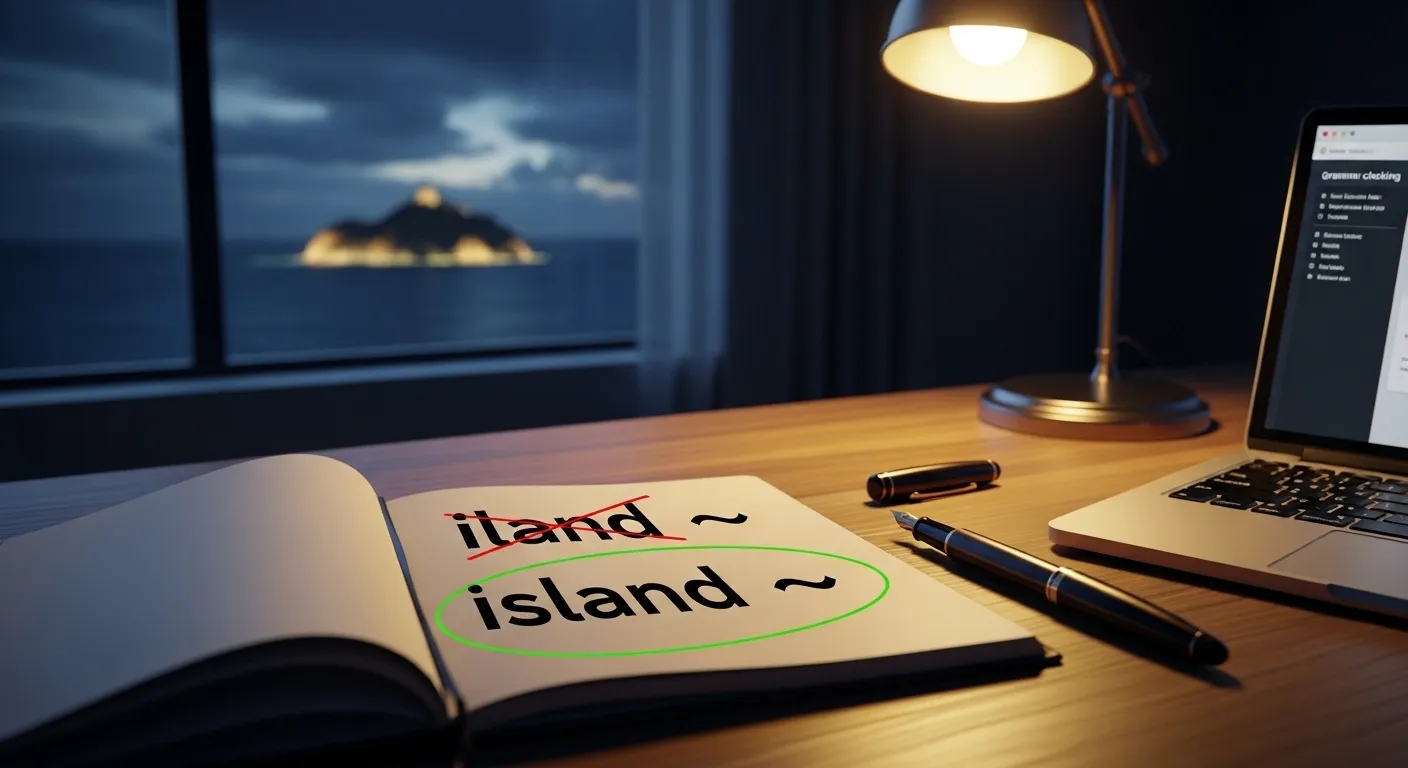
The correct spelling is island.
Iland is incorrect.
Even though the “s” is silent, it must be included in writing.
Examples:
- ✅ We visited a beautiful island in the Pacific.
- ✅ She dreams of living on a small island.
- ❌ We visited a beautiful iland.
- ❌ That tropical iland looks amazing.
Always use island in school, business, blogs, and formal writing.
The Origin of Iland or Island
The spelling confusion comes from history.
The word island comes from Old English īegland or ēaland, which meant “water land.” At that time, there was no “s” in the spelling.
Later, during the Middle English period, writers added the letter “s” by mistake. They thought the word was related to the French word isle. It was not. But the “s” stayed in spelling.
Today, the “s” remains silent. We pronounce it:
/ˈaɪ.lənd/
That is why people naturally write iland. They spell it the way it sounds. But English kept the historical spelling.
So:
- Pronunciation → sounds like “iland”
- Correct spelling → island
British English vs American English Spelling
Good news: there is no difference between British and American spelling for this word.
Both use island.
Unlike words such as colour/color or judgement/judgment, this word stays the same everywhere.
Examples:
- 🇬🇧 British English: The island is near Scotland.
- 🇺🇸 American English: The island is near Florida.
- 🇦🇺 Australian English: They live on a small island.
Comparison Table
| Version | Correct Spelling | Used In | Correct? |
| island | island | US, UK, Canada, Australia | ✅ Yes |
| iland | iland | Nowhere (informal mistakes only) | ❌ No |
No matter where your audience lives, always write island.
Which Spelling Should You Use?
You should always use island.
If your audience is:
- United States → Use island
- United Kingdom → Use island
- Canada → Use island
- Australia & New Zealand → Use island
- Global audience → Use island
There is no situation where iland is correct in standard English.
If you are writing:
- Academic papers
- Blog posts
- SEO articles
- Business emails
- News reports
Always choose island.
Common Mistakes with Iland or Island
Here are frequent errors people make:
1. Dropping the silent “s”
❌ Iland
✅ Island
Even though the “s” is silent, it must stay.
2. Mixing up with “isle”
Some writers confuse island with isle.
- Island = large or small land surrounded by water.
- Isle = poetic or formal word for island.
Example:
- We visited the tropical island.
- The British Isles include many isles.
3. Typing errors in SEO content
Writers sometimes type iland in headings or URLs. This can hurt SEO and credibility.
Search engines recognize island as correct. Using iland may reduce trust and rankings.
4. Autocorrect dependency
Some people rely fully on spell-check. But if spell-check is off, mistakes happen.
It is better to remember:
Island = “is” + “land”
Think of it as:
Is land surrounded by water? Yes → island.
Iland or Island in Everyday Examples
Let’s see how it works in real writing.
1. Email
Correct:
We are planning a trip to a Greek island this summer.
Incorrect:
We are planning a trip to a Greek iland.
2. News Writing
Correct:
The storm damaged homes on the island.
Incorrect:
The storm damaged homes on the iland.
3. Social Media
Correct:
Dreaming of island life 🌴
Incorrect:
Dreaming of iland life 🌴
4. Academic Writing
Correct:
The island ecosystem is unique and fragile.
Incorrect:
The iland ecosystem is unique and fragile.
In every context, the correct form is island.
Iland or Island – Google Trends & Usage Data
Search data shows that:
- Island is searched millions of times globally.
- Iland is searched far less and mostly as a spelling mistake.
Countries where confusion is common:
- India
- Pakistan
- Philippines
- Non-native English-speaking regions
In native English-speaking countries, iland is rarely used intentionally.
Search engines automatically suggest “Did you mean: island?”
This shows that island is the dominant and correct spelling worldwide.
Keyword Comparison Table
| Feature | Island | Iland |
| Correct spelling | ✅ Yes | ❌ No |
| Dictionary accepted | Yes | No |
| Used in US | Yes | No |
| Used in UK | Yes | No |
| Silent letter | “S” is silent | N/A |
| SEO friendly | Yes | No |
| Professional writing | Yes | No |
Always choose island for correct grammar and SEO strength.
FAQs
1. Is iland ever correct?
No. Iland is always incorrect in standard English.
2. Why is the “s” silent in island?
The “s” was added in the Middle English period due to a spelling mistake. It remained but is not pronounced.
3. Do British and Americans spell island differently?
No. Both spell it island.
4. Is island related to isle?
They look similar, but they have different origins. The “s” was added because of confusion with isle.
5. How do you pronounce island?
It is pronounced:
Eye-land
/ˈaɪ.lənd/
The “s” is silent.
6. Can I use iland in creative writing?
No, unless you are intentionally showing a child’s spelling mistake or fictional language.
7. Does using iland hurt SEO?
Yes. Misspelled keywords can reduce credibility and search performance.
Conclusion:
The confusion between iland or island is simple to fix once you understand it. The correct spelling is always island, with a silent “s.”
Even though we do not pronounce the letter, it must stay in writing.
This spelling comes from history. The “s” was added centuries ago and remains part of the word today. Both British and American English use the same spelling.
There is no regional difference.
If you are writing emails, blog posts, academic papers, social media captions, or business documents, always use island.
Using iland can make your writing look unprofessional and may affect SEO.
Remember this easy tip:
Island = land surrounded by water (with a silent “s”).
Now you can write with confidence. No more second guessing. No more spelling mistakes.