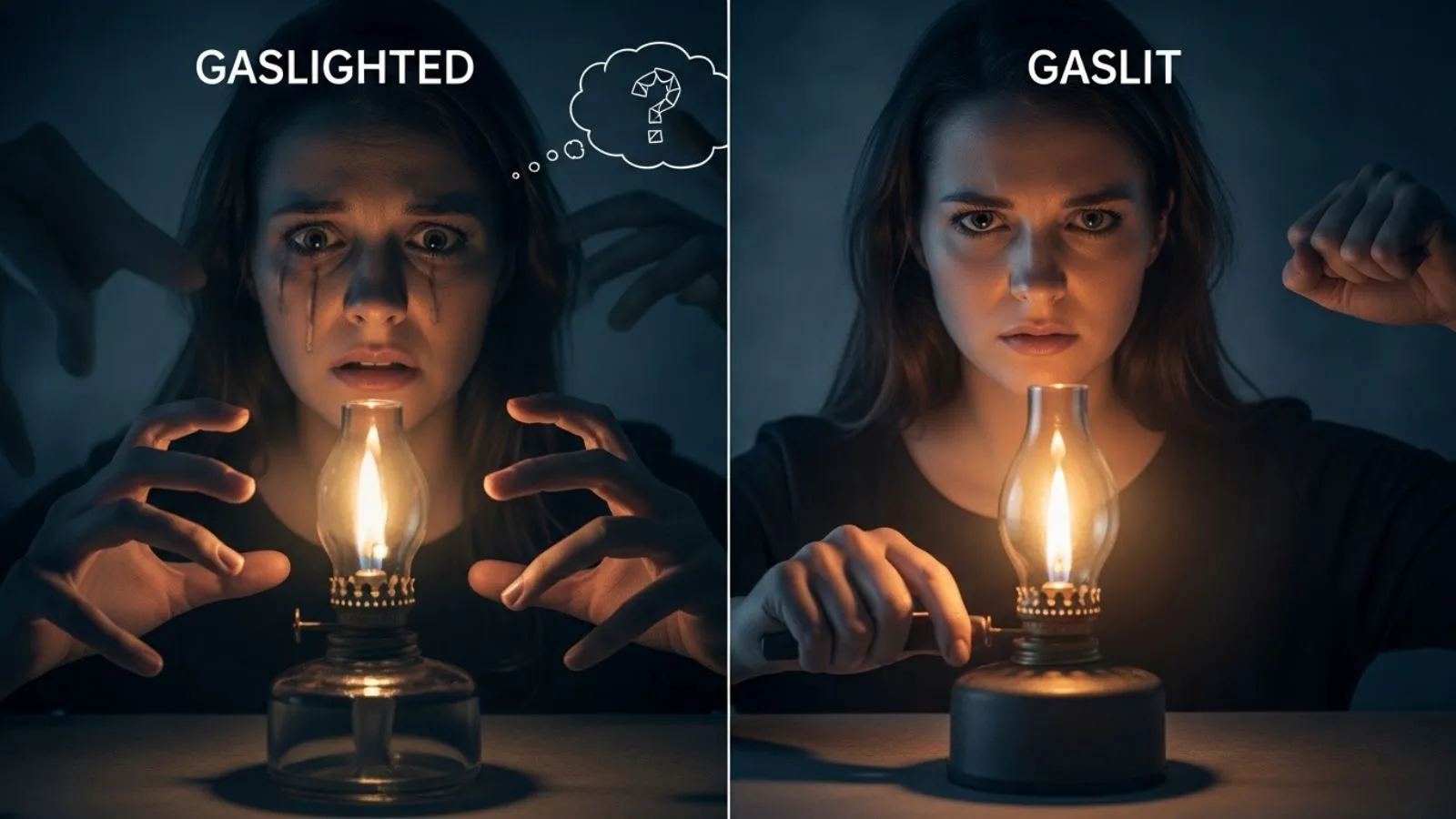
Many people wonder whether the correct past tense of gaslight is gaslighted or gaslit.
This question comes up in writing, social media, school, or professional contexts, as people want clear, dictionary-approved guidance.
Understanding the difference also helps when discussing gaslighting, the psychological manipulation where someone makes another person doubt their reality.
This guide clarifies the correct usage, regional differences, and real-world examples.
Gaslighted or Gaslit – Quick Answer
Short Answer: Both gaslighted and gaslit can be used, but they have slightly different traditional roles.
| Form | Typical Use | Example |
| gaslighted | Standard past tense/past participle for the verb meaning to manipulate someone | She gaslighted her partner over months. |
| gaslit | Traditional adjective (lit by gaslights) and sometimes used informally as a past participle | The room was gaslit in the old house. |
Gaslighted is often listed as the past tense of “gaslight” (the act of psychological manipulation) in major dictionaries.- Gaslit historically refers to something lit by gaslight (illuminated), but many people also use it informally for the past participle of “gaslight.”
Both forms are understood in everyday English, but gaslighted is more formally correct for the manipulative verb.
The Origin of Gaslighted or Gaslit
The words come from the verb gaslight, which itself was popularized from the title of the 1938 British play Gas Light and its later film adaptations.
- In the story, a husband manipulates his wife by subtly dimming the gas lights in their home and denying it, making her doubt her own senses.
- The verb gaslight evolved from this idea of causing someone to doubt their memory, perception, or sanity.
- As the term entered psychological and everyday English, people began asking: How do you form its past tense?
English does not have a single body that regulates usage, so sometimes both older and newer forms coexist. Dictionaries like Merriam‑Webster list gaslighted as the verb’s past tense, while older uses of gaslit come from traditional grammar of compound verbs like “to light.”
British English vs American English Spelling
| Feature | British English | American English |
| Past tense verb | gaslighted (preferred) | gaslighted (preferred) |
| Informal past participle | gaslit (common) | gaslit (very common) |
| Adjective for lighting | gaslit (traditional) | gaslit |
Key Differences:
- In British and American English alike, gaslighted is seen as the formal past tense when referring to manipulation.
- Gaslit is widely used informally as a past participle or adjective in both dialects, especially online or in casual writing.
Note: For most learners, choosing gaslighted for formal writing and gaslit for casual speech is a safe rule of thumb.
Which Spelling Should You Use?
For U.S. Audiences
- Use gaslighted in formal and academic contexts.
- Gaslit is widely understood and acceptable in informal writing.
For UK & Commonwealth Audiences
- Both forms are fine, but gaslighted reads as more standard in essays, reports, and professional writing.
- Gaslit still appears in everyday language and media.
For Global English
- Gaslighted is best for clarity and correctness.
- Gaslit is fine if your tone is casual or creative.
Common Mistakes with Gaslighted or Gaslit
Here are errors people often make:
❌ “He gaslit me to distract from his lies.” (While common, it’s informal)
✅ “He gaslighted me into doubting my own memories.”
❌ “I was gaslit when he just disagreed with me.” (Not every disagreement is gaslighting — it specifically implies manipulative intent.)
✅ “She gaslighted her partner by constantly denying events that happened.”
❌ “I’ve been gaslighting him all day.” (Present continuous is wrong for a one‑time event)
✅ “I was gaslighted throughout that period.”
Mistakes usually arise from using the term too broadly or confusing its grammatical forms.
Gaslighted or Gaslit in Everyday Examples
Email:
- “In yesterday’s meeting, I felt gaslighted when my contributions were dismissed despite evidence.”
News Context:
- “Observers say misinformation campaigns have gaslighted the public about election results.”
Social Media:
- “I can’t believe I was gaslit into thinking that was a good deal.”
Formal Writing:
- “The report highlighted instances where employees were gaslighted by management tactics.”
Note: Gaslit still appears in all these contexts, especially online, but gaslighted is safer in professional English.
Gaslighted or Gaslit – Google Trends & Usage Data
Search interest in gaslighting and related terms has sharply increased since the mid‑2010s, especially around 2016 as people began to use the word for politics, relationships, and social dynamics.
- According to Google Trends analyses, searches for “gaslighting” surpassed other post‑truth related terms like “fake news” and “disinformation” by 2020.
- It was one of the most searched relationship terms in Google’s 2024 year‑end list, reflecting its popularity in public discourse and searches.
This data shows that while gaslighted and gaslit might not individually trend as keywords, the broader concept behind them is highly relevant in modern discussion and searching behavior.
Keyword Variations Comparison Table
| Variation | Meaning | Correct Use |
| gaslighted | past tense or participle (formal) | She gaslighted her coworker. |
| gaslit | adjective or informal participle | The old street was gaslit. |
| gaslighting | noun of the action | Gaslighting is a form of abuse. |
| was gaslighted | correct past passive | She was gaslighted for years. |
| was gaslit | informal passive | She was gaslit by her partner. |
FAQs:
1. Is gaslit or gaslighted correct?
Both are used; gaslighted is traditionally the past tense for the verb, while gaslit is more informal and historically an adjective.
2. Can I use gaslit in formal writing?
It’s common in informal contexts, but gaslighted is safer for formal or academic work.
3. Are both spellings accepted in the UK and US?
Yes. Both dialects recognize both forms, but usage preferences may vary with tone and formality.
4. Does gaslit only mean “lit by gaslight”?
Traditionally yes, but modern English often uses it informally for the past participle of “gaslight.”
5. What does gaslighting mean?
It means psychological manipulation where someone is made to doubt their own memory or perception.
6. Is using gaslit as a verb wrong?
Not necessarily wrong — it’s widely understood — but not always preferred in formal writing.
7. Which form should I teach English learners?
Teach gaslighted as the standard past tense, and explain informal use of gaslit.
Conclusion:
In modern English, both gaslighted and gaslit are recognized forms of the past tense or past participle of the verb gaslight, which comes from the term gaslighting a concept used to describe manipulative behavior that causes someone to doubt their own reality or memory.
For clear, formal writing, gaslighted is the recommended choice, especially when describing manipulation.
Gaslit works well informally or when referring to traditional lighting by gaslight. Understanding this distinction not only improves grammar but helps communication be precise, respectful, and professional.
With global search interest and conversation around this topic still strong, knowing how to use both forms correctly gives you an edge in writing, teaching, and everyday language use.