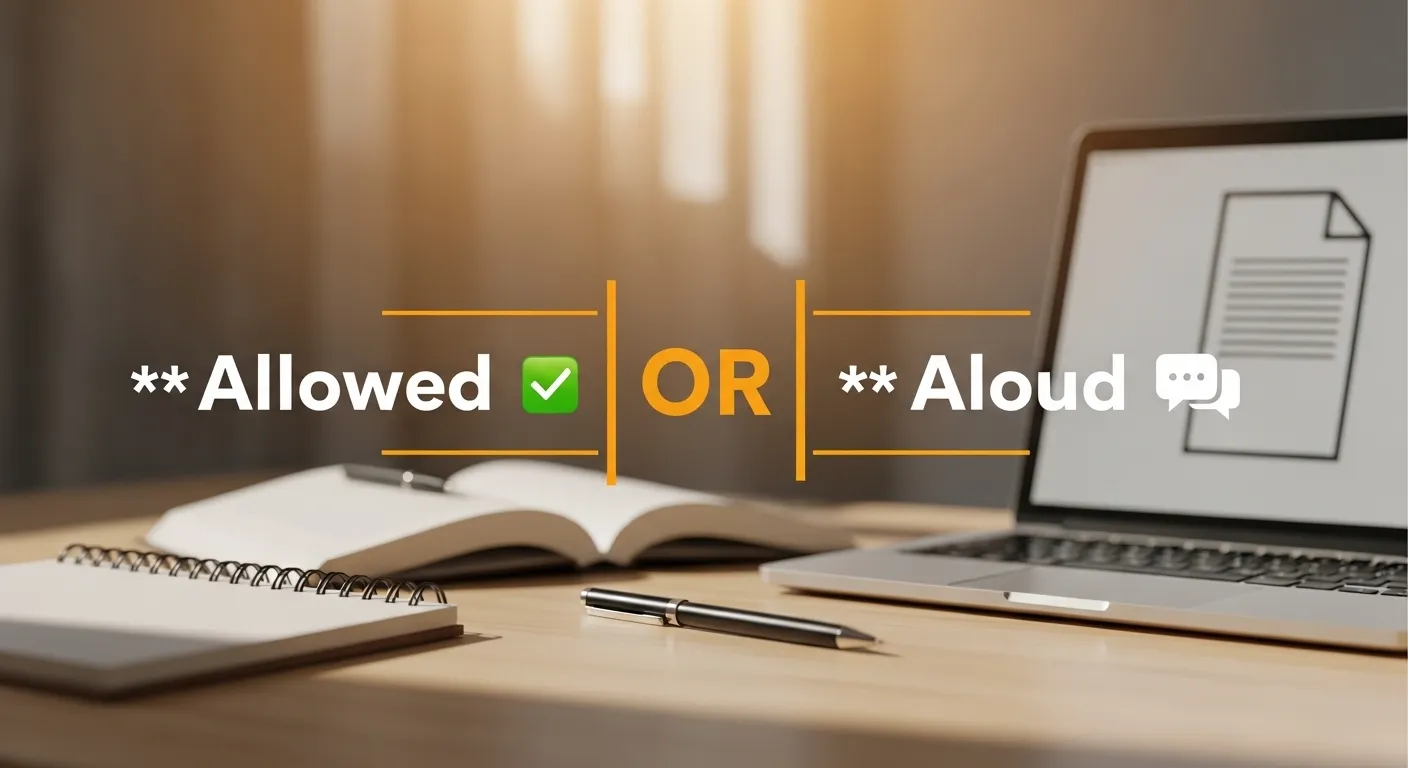
English has many words that sound the same but mean different things. Allowed and aloud are a common example. Because they sound almost identical, many writers confuse them.
The difference is simple. Allowed means permission is given, while aloud means spoken out loud so others can hear.
For example, “You are not allowed to enter the room” is correct because it talks about permission. But “She read the story aloud” is correct because it refers to speaking so others can hear.
These words are homophones, which means they sound the same but have different meanings and spellings.
Quick rule:
- Allowed = permission
- Aloud = speaking out loud
Once you remember this rule, you will easily choose the right word every time.
Allowed or Aloud – Quick Answer
The difference between allowed and aloud is simple once you know their meanings.
| Word | Meaning | Example |
| Allowed | Past tense of allow; means permission is given | Students are allowed to use calculators. |
| Aloud | Means spoken out loud; not silently | She read the poem aloud. |
Allowed
Allowed comes from the verb allow, which means to give permission.
Examples:
- Students are allowed to use their phones after class.
- Pets are not allowed in this restaurant.
- He was allowed to leave early.
Aloud
Aloud describes speaking in a voice that can be heard.
Examples:
- The teacher asked the student to read aloud.
- She laughed aloud at the joke.
- He spoke his thoughts aloud.
Quick Tip
If the sentence is about permission, use allowed.
If it is about speaking out loud, use aloud.
The Origin of Allowed or Aloud
Understanding the origin of words often helps explain their meanings.
Origin of Allowed
The word allowed comes from the Old French word alouer, which means to approve or permit.
This word entered Middle English and eventually became the verb allow, meaning to give permission or approval.
Over time, allowed developed as the past tense and past participle of the verb.
Example:
- The manager allowed employees to work remotely.
Origin of Aloud
The word aloud comes from the Middle English phrase a-loud.
In older English, the prefix “a-” often meant “in a state of.”
So a-loud literally meant “in a loud voice.”
Over centuries, the phrase merged into the single word aloud, which still means speaking so others can hear.
Why People Confuse These Words
There are two main reasons:
- They sound almost identical in pronunciation.
- English spelling does not always reflect pronunciation clearly.
Because of this, writers often mix them up when typing quickly.
British English vs American English Spelling
Unlike many English words, allowed and aloud are spelled the same in both British and American English. There is no spelling difference between the two varieties.
However, confusion still happens because of pronunciation similarities.
Example Sentences
| Region | Example |
| American English | Students are allowed to ask questions. |
| British English | Students are allowed to ask questions. |
| American English | Please read the paragraph aloud. |
| British English | Please read the paragraph aloud. |
Spelling Comparison Table
| Word | British English | American English | Meaning |
| Allowed | Allowed | Allowed | Permission given |
| Aloud | Aloud | Aloud | Spoken audibly |
Both spellings remain consistent worldwide.
Which Spelling Should You Use?
Choosing between allowed and aloud does not depend on geography. Instead, it depends on meaning.
Use Allowed When Talking About Permission
Use allowed if the sentence describes permission or approval.
Examples:
- Employees are allowed to work from home.
- Children are not allowed to stay up late.
- Cameras are allowed inside the museum.
Use Aloud When Talking About Sound or Speech
Use aloud when someone is speaking loudly enough to be heard.
Examples:
- She read the instructions aloud.
- The actor practiced his lines aloud.
- He wondered aloud if the plan would work.
Advice for Global Writers
If you write for an international audience:
- Focus on meaning, not spelling differences.
- Always check whether the sentence refers to permission or speaking.
This simple check prevents almost all mistakes.
Common Mistakes with Aloud or Allowed
Even experienced writers sometimes mix up these words.
Here are some common mistakes and corrections.
| Incorrect Sentence | Correct Sentence |
| You are not aloud to enter. | You are not allowed to enter. |
| She allowed the story to the class. | She read the story aloud to the class. |
| Talking is not aloud in class. | Talking is not allowed in class. |
| He said allowed that he was tired. | He said aloud that he was tired. |
Why These Mistakes Happen
Most errors occur because people write based on sound instead of meaning.
A quick proofreading check can easily fix the problem.
Allowed or Aloud in Everyday Examples
These words appear in many types of writing.
In Emails
- Employees are allowed to request remote work.
- Please read the announcement aloud during the meeting.
In News Writing
- Visitors are not allowed inside the restricted area.
- The witness read the statement aloud in court.
On Social Media
- Are we allowed to bring snacks to the movie?
- I accidentally read the message aloud during class.
In Academic Writing
- Students are allowed to reference external sources.
- The teacher asked volunteers to read their essays aloud.
These examples show how the meaning changes depending on the word.
Aloud vs Allowed – Google Trends & Usage Data
Search data shows that many people confuse these two words.
Common search queries include:
- allowed or aloud
- not allowed or not aloud
- read allowed or aloud
These searches usually come from students, writers, and English learners.
Countries Where the Search Is Common
The confusion appears frequently in:
- United States
- United Kingdom
- Canada
- Australia
- India
- Pakistan
Because English learners often rely on pronunciation, homophones like allowed and aloud cause frequent spelling mistakes.
Usage Contexts
| Context | Common Word Used |
| School rules | Allowed |
| Reading in class | Aloud |
| Workplace policies | Allowed |
| Public speaking | Aloud |
Understanding the context usually reveals the correct word instantly.
Allowed vs Aloud: Comparison Table
| Feature | Allowed | Aloud |
| Part of Speech | Verb (past tense of allow) | Adverb |
| Meaning | Permission granted | Spoken out loud |
| Example | Phones are allowed. | She laughed aloud. |
| Context | Rules, permission, approval | Speaking, reading, reacting |
| Pronunciation | Same as aloud | Same as allowed |
FAQs
1. What is the difference between allowed and aloud?
Allowed means permission is given, while aloud means speaking in a voice that can be heard.
2. Is it “not allowed” or “not aloud”?
The correct phrase is not allowed, because the sentence refers to permission.
Example:
Phones are not allowed in the classroom.
3. What does reading aloud mean?
Reading aloud means speaking written words so others can hear them.
Example:
The teacher asked the student to read the paragraph aloud.
4. Are allowed and aloud homophones?
Yes. They are homophones, meaning they sound the same but have different meanings and spellings.
5. Can allowed and aloud be used interchangeably?
No. These words have completely different meanings and cannot replace each other.
6. How can I remember the difference?
A simple trick:
- Allowed → Allow → Permission
- Aloud → Loud → Sound
7. Is the spelling different in British and American English?
No. Both allowed and aloud are spelled the same in British and American English.
Conclusion
Allowed and aloud sound the same but have different meanings. Allowed means permission is given, while aloud means spoken so others can hear.
For example, “Students are allowed to use laptops,” but “She read the story aloud.”
Remember: allowed = permission, aloud = speaking out loud. Understanding this simple rule helps you avoid common writing mistakes.

I’m English language author writing emphasises clarity, structure, and close attention to language. My work is often examined for stylistic comparison, focusing on Grammar work, narrative control, and subtle thematic development.